 Journal of Global Trade, Ethics and Law
1. Introduction
The course of defence cooperation between countries can reveal some principal characteristics of their relationship. For example, the U.S. is one of the key security guarantors for Lithuania as well as for the Baltic States. Since its re-establishment of independence in 1990, Lithuania has gradually aimed towards enhancing its cooperation with the U.S., particularly regarding cooperation in the defence field. Over the last three decades, specifics of cooperation on various defence topics have been discussed in President, and Defence Minister or Secretary (Lithuanian and the U.S., respectively) level meetings, and were further implemented in the Agreements and/or published in the respective National Laws referencing defence and security. One of the bilateral interests in defence cooperation is the development of the sustained capability of the Lithuanian Armed Forces (LAF) which includes the procurement of required armaments, ammunition, and equipment. As a major arms producer and exporter, the U.S. is capable of both recommending modern equipment for a reasonable price, while sometimes even offering to cover a portion or all of the cost for various equipment. The growing Lithuanian defence budget and the U.S. support programs have opened new opportunities for the Lithuanian Ministry of Defence (MoD) to acquire armaments on the international market.
The intent of this study is to characterize the U.S. and Lithuanian defence cooperation with focus on Lithuanian armament procurement from the U.S. The analysis provided explains the cooperation as it has progressed from March 1990 to May 2020 using content and comparison analyses of primary and secondary data. This is the first time bilateral defence cooperation and Lithuanian armament procurement have been analysed in regards to the given timeframe and detail in this study.
In general, the topic of the U.S.–Lithuanian relationship has been of scientific interest, but the majority of studies have used a broader approach looking at the perspective of the entire region of the Baltic States. Gerda Jakštaitė (2011; 2014; 2019) analysed bilateral relation aspects during different periods (Clinton vs Obama; 2013–2014; post-2014), focused on the military domain and indicated there were positive changes from the U.S. strategies towards Lithuania. Vaidotas Urbelis (2003; 2005) analysed the U.S. Grand Strategy and its effect on Lithuania prior to 2004, explaining the evolution of LAF and its involvement in international operations. The author concluded that Lithuania would mostly follow U.S. policies and strive to meet the bare minimum requirements of EU policies merely to remain in compliance. Similar findings could be found in a Marko Lehti (2007) study where he concluded that the Baltic States, instead of being ‘protégé’s of the U.S.’, are transforming into intermediaries between Brussels and Washington. Margarita Šešelgytė (2013) concluded that Lithuania is a trans-Atlantic military activist, however, limited in its resources. Sigita Trainauskienė (2013) applied some of her focus towards transatlantic relation issues for Lithuanian security and concluded that Lithuania needed to invest with the U.S. in the development of defensive capabilities because the U.S. was shifting its attention to Asia. Renatas Norkus (1999) analysed bilateral developments including military cooperation during the period of 1996–1999. Derek E. Mix (2020) concluded that cooperation between the
Baltic States and the U.S. must focus on security, energy and economic sectors, and building LAF capabilities. Lithuanian MoD policies were analysed by Algirdas Orenius (2003) for the period of 1990–2002. Erik Männik (2013) assessed the Baltic States security strategies during the period from 2002–2012 and concluded that close defence cooperation between the Baltic and Nordic countries would evolve, but will not replace a bilateral relationship with the U.S. Some of the authors focused their attention on the specific defence cooperation venues such as Host Nation Support (HNS), and the Defence Cooperation Agreement (DCA). Valdis Otzulis and Žaneta Ozoliņa (2017) discussed HNS issues in the Baltic States. Benjámin Baksa (2019) examined the U.S. and Eastern European DCAs. Moreover, many studies in the post-2014 period were carried out by Think tanks, such as RAND, ICDS, the Atlantic Council, the Hoover Institution, and the Heritage Foundation on a wide scale of topics including resilience of the Baltic States, future defence cooperation, and the need for defence capabilities. Efforts were made while analysing bilateral economic bounds, trade specifics, foreign direct investment (FDI), and arms sales – which could better explain the particularities of rapid bilateral military cooperation. In that regard, Jadvyga Čiburienė and Galina Zaharieva (2006) analysed Lithuanian factors of competiveness; Derek E. Mix (2020) highlighted Lithuanian economic factors, intensity of bilateral economic relations; Nicola M. Gathright and Rima Ambrazevičienė (2006) compared the acquisition systems supporting the defence systems of Lithuania and the U.S.; Jonė Kalendienė and Mindaugas Loda (2019) assessed the U.S. and China trade war on export of largest trade partners of Lithuania. Furthermore, Carraher et. al. (2006) considered the extent to which the demographic and work-related variables are useful predictors of satisfaction with work compensation system like pay level, benefits, raises in the U.S. and Baltic States. Karin Larson and Jenny Wikström (2001) investigated foreign trade of the Baltic States with special consideration given to trade partners that are related with reloading goods in Göteborg (Denmark) and concluded that the U.S. could offer most of opportunities. Nikolai Mezhevich and Yuri Zverev (2018) look at economic sustainability of Estonia, Latvia, and Lithuania in the context of military spending and conclude that their military spending does not contribute to the technological and economic agenda.
This manuscript is structured in two parts. The first part describes a retrospective of bilateral defence cooperation, and analyses national strategic documents, outcomes of the Presidential and Defence Ministerial/Secretary level meetings, and the content of the bilateral agreements. Furthermore, venues of defence cooperation are identified and analysed. The second part focuses more specifically on U.S.–Lithuanian defence cooperation, i.e. armament procurements. It provides a revision of the Lithuanian defence budget, as well as an analysis of armament procurements from the U.S. indicating possible future acquisitions by LAF in the eight years following 2020. The discussion covers current and future armament procurement options that ought to be reconsidered in the light of the methods previously chosen by several NATO countries.
2. Retrospective of the U.S. and Lithuanian Defence Cooperation
It is critical to start this part with the historical note that on 23 July 1940, the U.S. Under Secretary of State, Sumner Welles, stated in his Declaration that the U.S. rejected the forcible incorporation of Lithuania and the other Baltic States into the Soviet Union (Derse 2010). Therefore, it was noticeable to all that the U.S. had a moral obligation to support the rise of reborn Baltic States in the 1990s by facilitating their path towards a better future. This in fact encouraged the leaders of Estonia, Latvia, and Lithuania to seek out the support of the U.S.
The Lithuanian Embassy in the U.S. was reopened following the proclamation of independence on 11 March 1990. After the August Coup in Moscow which occurred from 19–22 August 1991, the U.S. then recognized the restoration of Lithuania’s independence on 2 September 1991. The establishment of the U.S. Embassy in Vilnius started on October 2 1991, and the U.S. Defence Attaché to Lithuania was assigned in 1992. The Lithuanian Defence Attaché to the U.S. was later assigned in 1995 (Grina 2017; KA 2005; OH 2019).
The first U.S. ship ‘Hawes’ embarked on the Lithuanian seaport in Klaipėda (Figure 1) on 1 July 1992. The U.S. Army liaison team led by Colonel Robert Barziloski started the program ‘Soldier for Soldier’ in April 1993. The first results of newly established cooperation became evident when the Lithuanian fleet successfully participated in NATO and the U.S. exercises ‘BALTOPS 93’ in mid-June 1993. Therefore, it is obvious initial defence cooperation was initiated between the U.S. and Lithuania even before ‘the last Russian soldier’ withdrew from Lithuania on 31 August 1993. The initial perception of Lithuania being a neutral country changed to it being a nation aspiring to join NATO as of 4 January 1994 when the President of Lithuania sent a letter to the NATO Secretary General expressing the desire to become a NATO member. On 27 January 1994, Lithuania joined the Partnership for Peace (PfP) program. The PfP program was an idea brought about by the U.S. in the autumn of 1993 with the concept of bringing the militaries of East European countries into compliance with NATO standards. The more formal level of bilateral defence cooperation was reached on 16 January 1998 when the Baltic Charter was signed between the U.S. and the Baltic States.
Figure 1 The U.S. ship ‘Hawes’ embarked the Lithuanian seaport in Klaipėda on 1 July 1992; Commander of the U.S. ship ‘Hawes’ Frens Demasi (on the right) was met by the Deputy Border Guard
Regiment Vytautas Urbas (on the left) (Kažerskas, Brencius, & Vitkauskas 2012)
From 1994 to the present, Lithuanian troops have been actively engaged in NATO, UN, and U.S. led international peacekeeping and combat support missions. The most notable achievement to date was when Lithuanian soldiers and civilians were placed in charge of the Provincial Reconstruction Team (PRT) in the Ghor Province in Afghanistan from 2005˗2013. Following the aggressive actions by Russian Federation towards Georgia in August 2008 and the annexation of Crimea in the Ukraine in 2014, U.S. leadership reassured Lithuania it was committed to providing support as agreed upon under NATO Article 5. Soon after the Ukrainian crisis, the U.S. deployed additional fighters and rotational ground troops to the Baltic Region, increased the number of exercises, and prepositioned military equipment to deter Russian aggression. NATO has evolved to take over some of the U.S. burden, but the U.S. presence appears that it will remain in Lithuania for the foreseeable future (Jakštaitė 2011; KA 2005; Mix 2020).
Amongst the bilateral cooperation that remains continuous and intense between the U.S. and Lithuania, the defence cooperation is a part that is consistently one of the primal topics. The U.S. support for Lithuania’s aspiration to become a NATO member and to be an active participant in deterrence activities in the Baltic Sea region since 2014 has been reciprocated by the Lithuanian loyalty demonstrated during participation in U.S. led international operations.
2.1. National strategies vis-à-vis practical bilateral defence cooperation
Defence cooperation is affirmed by each country’s continued resolute stature in regards to their policies, strategies, or doctrines. An analysis over the time of these documents brings to light the intent to sustain this cooperation (Table 1).
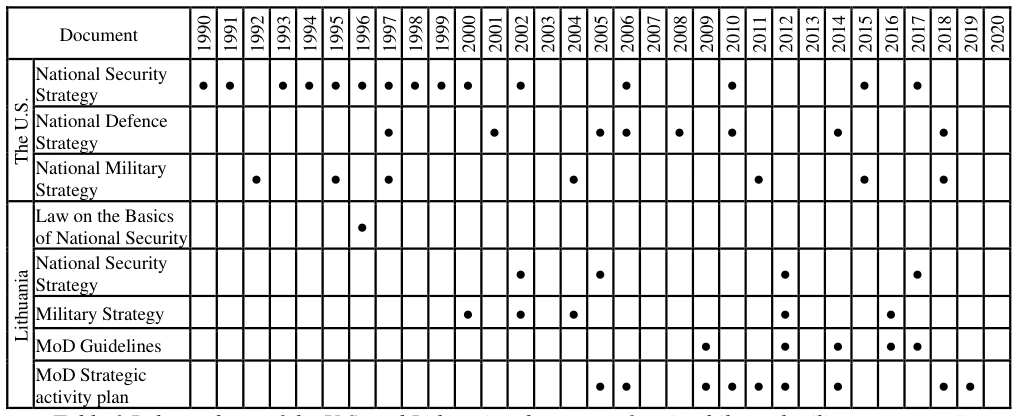
The U.S. documents mentioned in Table 1, including the National Defence Strategy (NDS), also referred to as Quadrennial Defence Review (QDR), are used for this analysis as the contents indicate strategic reasons for such intense bilateral military cooperation and give reference to particular cooperation venues. The analysis of Lithuanian documents, which include the Law on the Basics of National Security (LBNS), may also be seen as a reference to anticipated venues of defence cooperation with the U.S.
2.1.1. Lithuanian footprint in the main U.S. documents related to the Security and Defence Strategies
The U.S. National Security Strategy (NSS) outlines the major national security concerns and threats and expresses how to deal with them. The U.S. NSS does not mention Lithuania in detail. Lithuania is only subtly mentioned in the general context of the Baltic States in the protocols of NSS from the years 1997, 1998, 1999, 2000, and 2015. If taken from the context of other U.S. NSS or documents such as the NDS/QDR, or National Military Strategy (NMS), it is assumed that Lithuania is seen as either a part of Eastern Europe, as a state of the former Soviet Union, or as a European ally. The U.S. NSS indicates the U.S. has had the following intentions or views towards Lithuania over the last three decades: a) promotion of the state’s self-determination and support for its reforms towards democracy in 1990–1993; b) support for integration into NATO and the World Trade Organization, and support for democratic reforms and movement towards a free market, which was required to support peace efforts in troubled regions in 1994–2000; c) requirement to support the War on Terrorism, and continued expansion of a free market in 2002–2010; d) support for Lithuanian security, a requirement to support the continuous fight against extremists and terrorists, and increase defence spending in 2015–2017.
In the U.S. NDS/QDR, there are specified bilateral cooperation aspects mentioned at the Department of Defence (DoD) level. The QDR released in 1997 promoted the benefits of regional stability and praised NATO leadership for increasing the size of the Alliance. The 2001 QDR and 2005 NDS both specified the requirement for the U.S. military to strengthen existing alliances and partnerships. The QDR released in 2006 informed about expanded DoD authority to lease or lend equipment to other countries. In 2008, the NDS continued with the idea of strengthening alliances and proposed the U.S. military to transfer its capabilities to the Allies. The QDR in 2010 reaffirmed the commitment to Article 5 to develop European missile defence capabilities, and maintain a robust U.S. military presence in Europe. In 2014, the QDR foresaw strengthening of the military capabilities of European Allies by maintaining forward-positioned forces and training with NATO Allies. In the 2018 edition of the NDS, the U.S. expected Allies and partners to contribute an adequate share to the collective security. Also, it was highlighted that Allies could request to purchase U.S. military equipment as it would accelerate the ability to integrate with the U.S. Forces.
The U.S. NMS was delivered to the Secretary of Defence outlining the strategic aims of the U.S. Armed Forces. The NMS released in 1992 and 1995 focused on the potential political and economic instabilities in Eastern Europe. The NMS issued in 1995 highlighted the priority to develop the militaries of Central and Eastern Europe. The NMS delivered in1997 focused on the execution of the PfP initiative, foreign military sales, and International Military Education and Training. The 2004 NMS focused on the War on Terrorism and stressed the necessity to increase Allies’ and partner’s capabilities, to cooperate during joint operations. The NMS released in 2011, 2015, and 2018 changed the focus towards security in Europe, in space and cyberspace security, and onto Ballistic Missile Defence. The NMS posted in 2015 touched on U.S. operation Atlantic Resolve, the European Reassurance Initiative (ERI), support for NATO’s Readiness Action Plan, exercises, and investments. The NMS issued in 2018 continued to seek greater interoperability among Allies/partners, highlighting the necessity to enhance their combat lethality.
2.1.2. How do the main Lithuanian documents related to the National Security
Strategies define its military cooperation intentions with the U.S.?
LBNS defines the national security system, regulations, and its instruments. The law highlights military interoperability with NATO forces as a key requirement for LAF (Miniotaite 2007). The U.S. is not mentioned specifically in the LBNS.
Lithuanian National Security Strategy (LNSS) details the tasks deriving from the LBNS. All released LNSS’s highlight the U.S. as a strategic partner. The LNSS from 2002 and 2005 acknowledge Lithuanian support for the anti-terrorist coalition led by the U.S. and sought to strengthen transatlantic cooperation. The LNSS released in 2005 informs that Lithuania is actively participating in the U.S. initiative of the Enhanced Partnership in Northern Europe and the Council of the Baltic Sea States. The LNSS released in 2012 and 2017 state that the U.S. in NATO and its military presence in Europe are the key guarantees for Lithuanian security.
Lithuanian Military Strategy (LMS) establishes the ways of using LAF to implement State security and defence policy goals. LMS editions from 2000 and 2002 highlight the U.S. importance for European security with references to the Baltic Charter. The LMS edition from 2004 focuses on the need for military cooperation as it would allow LAF to strengthen relations with a strategic partner. In the 2012 LMS edition, it mentions a need to have close bilateral defence cooperation with the U.S. In the 2016 LMS edition, the U.S. is mentioned in greater detail, e.g. Lithuania sees the U.S. military presence in Europe and the Baltic region, and LAF have to retain close bilateral defence cooperation with the U.S. (Miniotaite 2007).
More practicalities of bilateral defence cooperation could be found in two main documents circulated at the MoD level; the Guidelines of Minister of Defence (MoD Guidelines), and the MoD Strategic Activity Plan (MoD Plan). MoD Guidelines define priorities of the Lithuanian National Defence System (LNDS) and results to be achieved in the medium-term. In the MoD Guidelines edition of 2009 and 2012, bilateral cooperation with the U.S. was seen only in terms of ensuring LAF participation in international operations. MoD Guidelines for 2014 seek greater U.S. military presence in the region while tasking LAF to organize regularly scheduled exercises. Guidelines for 2016 feature one additional cooperation venue – support for U.S. European Command contingency planning. MoD Guidelines for 2017 are the most descriptive in regards to cooperation as they require the permanent presence of the U.S. troops in Lithuania, active involvement in ongoing exercises, greater support in enhancing LAF capabilities, Think tanks, and synchronization of bilateral and national defence plans.
The MoD Plan covers 3 years’ worth of perspectives and is based on how financial allocations are to be used in each particular program. The MoD Plan provides the most details regarding ongoing bilateral military cooperation between the U.S. and Lithuanian militaries. According to MoD Plans, Lithuania is willing to participate in the U.S. lead coalitions during international operations, and to provide HNS if the U.S. troops are to be deployed to Lithuania. However, requirements from Lithuania towards the U.S. differed and could be grouped into two periods, more specifically, pre-2014, and post-2014. In the pre-2014 period, the Lithuanian MoD was focused on administering support via the U.S. Foreign Military Fund (FMF) which was looking to deepen defence cooperation starting in 2010. In all post-2014 MoD Plans, it was stressed to seek the U.S. military presence in Europe and the Baltic region, and to look for financial and advisory support from the U.S. Moreover, post-2014 MoD Plans provide specific details of bilateral defence cooperation such as names and dates of exercises, projects supported by FMF, and cooperation details among various U.S. and Lithuanian military headquarters (LMoD 2005).
2.1.3. How do national strategies foresee bilateral defence cooperation?
The analysis of the U.S. and Lithuanian documents (Table 1) that frame bilateral military cooperation identified the ten most frequently mentioned cooperation venues (Table 2). However, it is important to note that some of the venues were relevant only during a certain period.
Defence planning
The U.S. military
Equipment sales
Interoperability
Increasing LAF
Cybersecurity
International
Air defence operations capacities
Exercises presence
HNS
Documents
NSS ● ● ● ● ●
●
U.S.
The
NDS/QDR ● ● ● ● ● ●
● ●
NMS ● ●
● ● ●
● ●
LBNS
Lithuania
LNSS ● ● ●
● ●
LMS ● ● ● ●
●
MoD Guidelines ● ● ●
● ●
●
Most of the U.S. and Lithuanian DoD/MoD strategic documents reveal that the following three venues were the most important for attaining bilateral military cooperation: 1) participation in international operations; 2) increasing LAF capabilities; and 3) the U.S. military presence in Europe and the Baltic region. Another six cooperation areas were of particular U.S. interest but reflected more towards some of the Lithuanian strategies or MoD documents. Only one venue of cooperation that is of vital importance for Lithuania as a host is HNS, therefore it has no specific relevance on the U.S. documents.
2.2. Messages related to Defence cooperation at the U.S. and Lithuanian Presidents’ engagements
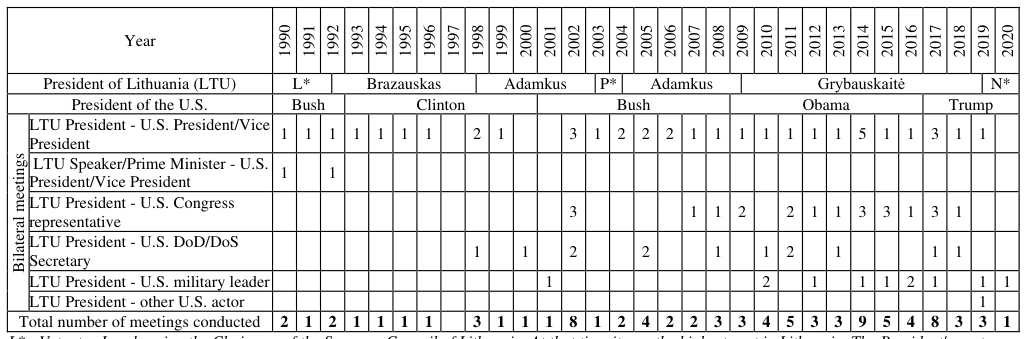
During the last three decades, there were multiple Presidential engagements in a bilateral, quadrilateral, or other formats which included official and non-official arrangements (Table 3). Delegations from the U.S. House of Representatives, the U.S. Senate, the U.S. Department of State (DoS), military leaders from the U.S. DoD, and other important U.S. representatives visited the President of Lithuania. Aside from these visits, only a Speaker of the Seimas (Parliament of Lithuania) and a Prime Minister were able to meet the U.S. President in the early 1990’s. No other Lithuanian official engagements with the U.S. President were identified within the analysis.
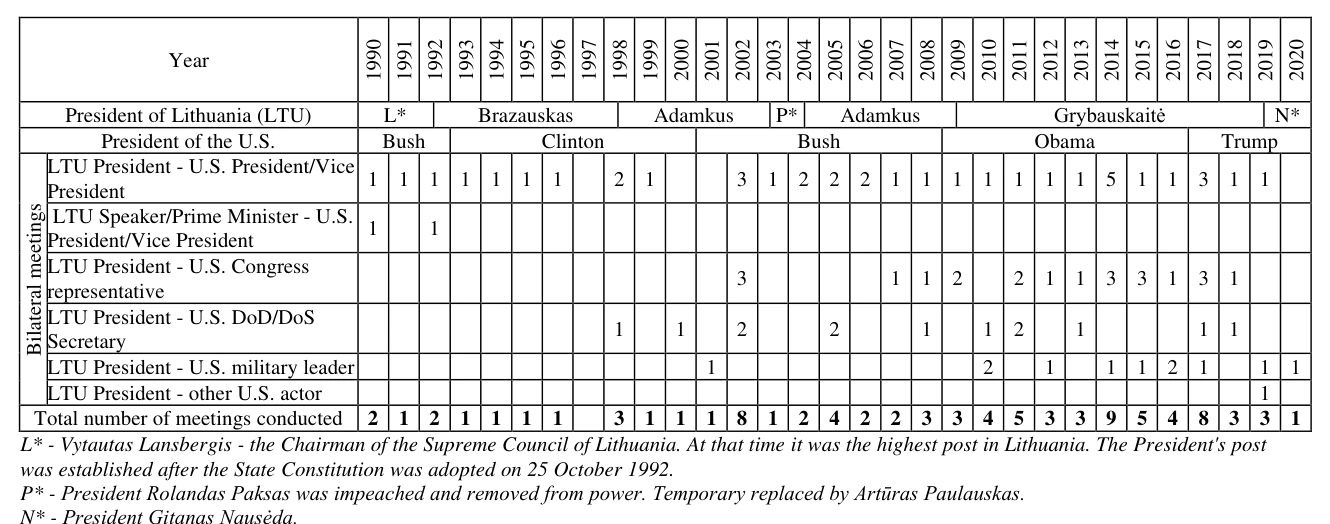
The most intensive leaders’ bilateral engagements happened in 2002, 2014, and 2017. In 2002, most of the decisions were made to invite Lithuania to start negotiations that would lead towards joining NATO (Figure 2). In 2014, more intensive meetings were held to emphasize that the Russian annexation of Crimea in the Ukraine could also turn out to be a threat towards the security of the Baltic countries. Therefore, active engagements at the Presidential and other levels were aiming to ensure there was political and military support primarily from the U.S. In 2017, intensive collaboration was held to discuss Russian/Belorussian military exercise ‘Zapad’ which was conducted near Lithuanian borders. ‘Zapad 2017’ exercises were treated as an expression of conventional threat against Lithuanian existence (LRP 2017b).

● ●
●
●
●
● ● ● ● ● ● ●
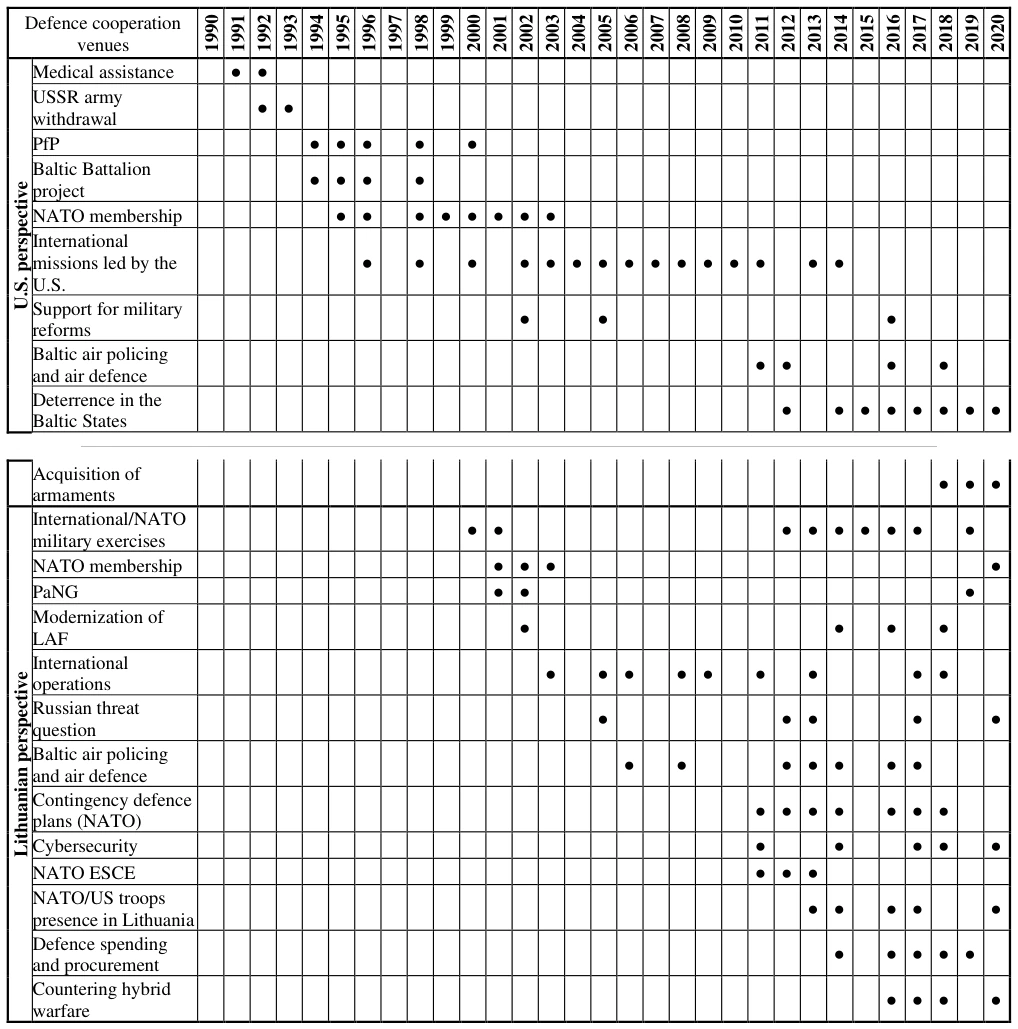
During the meetings the U.S. representatives mentioned the following defence cooperation venues concerning Lithuania: 1) PfP project; 2) support for NATO membership; and 3) participation in international missions and deterrence operations in the Baltic States. International missions was the primary topic on the agendas at bilateral meetings leading to more than 15 years of consistent cooperation. Before joining NATO, Lithuanian interests in defence cooperation were focused on attaining NATO membership, participation in/organizing international exercises, cooperation with the Pennsylvania National Guard (PaNG), and modernization of the LAF. After joining NATO, the scope of topics related to defence cooperation was relevant to the security situation in the Baltic region. The most important defence cooperation venues that required U.S. support were as follows: 1) the U.S. troops participation in the exercises conducted in Lithuania; 2) the U.S. and NATO troops presence in Lithuania; 3) support for or participation by Lithuanian troops in international missions; 4) extension of the Baltic air policing mission and arrangements for air defence; 5) ensuring defence plans for Lithuania were prepared by NATO; and 6) defence spending and possible procurement. The majority of defence cooperation venues from both sides were of common interest. Some of the topics raised by the Lithuanian side, such as the Membership Action Plan to Georgia and Ukraine, did not become of particular bilateral interest.
To conclude, the importance of defence cooperation is recognized starting at the Presidents’ level which is why it was often included in the agendas at bilateral meetings. The topics of bilateral defence cooperation were significantly relevant for national interests and the global security situation. The intensiveness of engagements at
Presidential levels was demonstrated the relevant to Lithuanian, the Baltic States, and Poland Presidents’ initiative.
2.3. Main topics of bilateral cooperation at the Defence Minister/Secretary level
Official ministerial meetings between the U.S. and Lithuanian defence establishments (Table 5) started after the Russian Armed Forces were withdrawn from Lithuania (Stankevičius 1996). Within the years, Lithuanian Minister of Defence and the U.S. Secretary of Defence were able to maintain a similar frequency of meetings. However, with consideration to Lithuanian Minister’s of Defence and other U.S. representatives meetings’, three peak periods could be identified: 1) post-Georgian war period (2009–2010); 2) post-Ukrainian crisis period (2013–2015); and 3) ‘Zapad 2017’ and post ‘Zapad 2017’ periods (2017–2019).
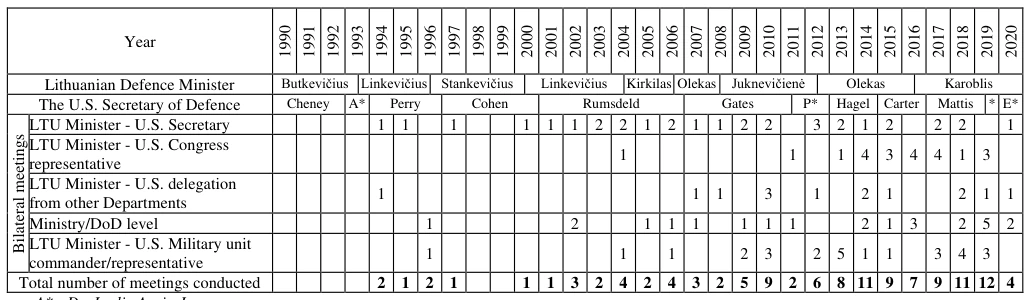
The peak engagement periods were tied to the Russian activities in Georgia, Ukraine, and military exercises ‘Zapad 2017’. The exercises were conducted near Lithuanian borders and were perceived as a possible threat to Lithuanian security (LRP 2017a). As a result, the Lithuanian defence establishment was keen to receive various important visitors from the U.S. and relay messages of concern. Additionally, in order to spread security-related concerns in the Baltic region to the U.S. policymakers’, Lithuanian defence ministry and MoD representatives conducted engagements with the U.S Ambassador and various U.S. Think tanks (Table 6).


A wide spectrum of questions related to bilateral defence cooperation were discussed during meetings at the Defence Ministry/Secretarial level. The following defence cooperation venues, looking from the U.S. perspective, remained consistent throughout nearly three decades of mutual relations: support for developing the LAF; participation in international missions; the State cooperation program with PaNG; facilitation of military cooperation among three Baltic States; and a provision of military equipment and arms sales. From the Lithuanian perspective, these cooperation venues remained consistent for more than two decades: participation in joint exercises, development of national defence capabilities, and participation in international operations. All other cooperation venues initiated by one, or agreed upon by both, countries did not last long as they were situation driven.
From the beginning of the bilateral defence cooperation which started in 1994, the U.S. was looking to support the Lithuanian ambition to become a NATO member. After Lithuania joined NATO, the U.S. continued with its ambition to help other former USSR states to gain acceptance into NATO (until 2009) thereby using the Lithuanian platform as a means to guide Georgia and the Ukraine towards membership. Bilateral Defence Minister/Secretary meeting agendas also started including topics such as European missile defence; the Proliferation Security Initiative; support for PRT in Afghanistan; and cargo transit from Afghanistan to the U.S. via Lithuanian seaports. The following defence cooperation venues were discussed during various ministerial meetings as a result of the Ukrainian crisis: Lithuanian defence spending, Cybersecurity, ERI, and investments in Lithuanian military and civilian infrastructure. It is evident that before 2004 and the Ukrainian crisis the U.S. had limited cooperation venues with Lithuania. However, after Lithuania joined NATO, the level of cooperation greatly improved.
The focus of the Lithuanian Defence Minister and his ministerial staff meetings with the U.S. counterparts could be divided into pre- and post-Ukrainian crisis periods. Prior to 2014, the Lithuanian Defence Minister was seeking U.S. support for the acceptance of Lithuania into NATO; facilitating the NATO Baltic air policing mission; support for Lithuanian lead PRT in Afghanistan; and ways for Lithuania to assist with U.S. military cargo movement from Afghanistan to the continental U.S. via the seaport at Klaipėda, Lithuania. In the post-Ukraine crisis period, discussions mainly focused on the need for increased military cooperation as identified in messages addressed from the Lithuanian Defence Minister to various U.S. delegations. In this period, defence cooperation venues such as procurement of U.S. military equipment, provision of U.S. financial assistance, cyber security, warfare in the information domain, provision of HNS for U.S. troops, Lithuanian defence spending, interoperability between both militaries, enhancement of Lithuanian air defence capabilities, and support for implementing ERI were evident.
In summary, bilateral talks between the U.S. and Lithuanian defence establishments depended on the developments in the security domain. Having consistent meetings, as well as strict attentiveness to every detail of conversations, was critical. However, three bilateral meeting peak moments stood out as to why the state’s security was a concern. The main, long-lasting defence cooperation venues of bilateral interests were identified as the development of and support for LAF participation in international operations. All other long-lasting defence cooperation venues, such as the State cooperation program with the PaNG, arms sales, participation in joint exercises, and facilitation of military cooperation among the three Baltic States, were not equally recognized as being the most important topics for both sides. Defence cooperation venues that lasted for a shorter period were situation driven, e.g. Baltic air policing; the transit of the U.S. cargo from Afghanistan; and the implementation of ERI.
2.4. The details of the U.S. and Lithuanian defence cooperation agreements
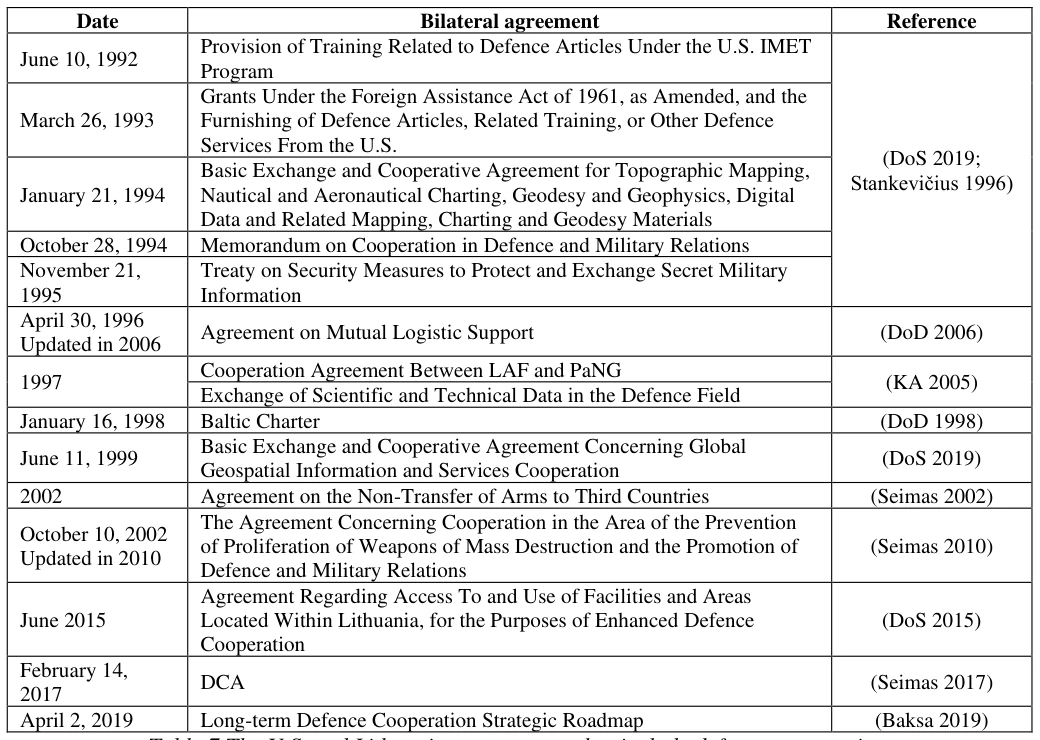
There are sixteen bilateral agreements (Table 7) signed between both countries that touch on bilateral defence cooperation. The most important of them are the Memorandum on Cooperation in Defence and Military Relations, the Baltic Charter, DCA, and the Long-term Defence Cooperation Strategic Roadmap.
Accessible table text
| Date | Bilateral agreement | Reference |
|---|---|---|
| June 10, 1992 | Provision of Training Related to Defence Articles Under the U.S. IMET Program | (DoS 2019; Stankevičius 1996) |
| March 26, 1993 | Grants Under the Foreign Assistance Act of 1961, as Amended, and the Furnishing of Defence Articles, Related Training, or Other Defence Services From the U.S. | — |
| January 21, 1994 | Basic Exchange and Cooperative Agreement for Topographic Mapping, Nautical and Aeronautical Charting, Geodesy and Geophysics, Digital Data and Related Mapping, Charting and Geodesy Materials | — |
| October 28, 1994 | Memorandum on Cooperation in Defence and Military Relations | — |
| November 21, 1995 | Treaty on Security Measures to Protect and Exchange Secret Military Information | — |
| April 30, 1996 Updated in 2006 | Agreement on Mutual Logistic Support | (DoD 2006) |
| 1997 | Cooperation Agreement Between LAF and PaNG | (KA 2005) |
| — | Exchange of Scientific and Technical Data in the Defence Field | — |
| January 16, 1998 | Baltic Charter | (DoD 1998) |
| June 11, 1999 | Basic Exchange and Cooperative Agreement Concerning Global Geospatial Information and Services Cooperation | (DoS 2019) |
| 2002 | Agreement on the Non-Transfer of Arms to Third Countries | (Seimas 2002) |
| October 10, 2002 Updated in 2010 | The Agreement Concerning Cooperation in the Area of the Prevention of Proliferation of Weapons of Mass Destruction and the Promotion of Defence and Military Relations | (Seimas 2010) |
| June 2015 | Agreement Regarding Access To and Use of Facilities and Areas Located Within Lithuania, for the Purposes of Enhanced Defence Cooperation | (DoS 2015) |
| February 14, 2017 | DCA | (Seimas 2017) |
| April 2, 2019 | Long-term Defence Cooperation Strategic Roadmap | (Baksa 2019) |
Officially, defence cooperation between Lithuania and the U.S. started in 1994 when the Memorandum on Cooperation in Defence and Military Relations was signed by the U.S. Defence Secretary, William Perry, and the Lithuanian Minister of Defence, Linas Linkevičius. The Memorandum specified cooperation venues that had already been foreseen in assistance for Lithuania as it joined the NATO PfP program. Furthermore, the Memorandum laid out the foundation for bilateral meetings made up of smaller working groups. The Baltic Charter, signifying enhanced partnership, envisioned several elements of defence cooperation which included: running the Baltic Peacekeeping Battalion, the Baltic Squadron, and the Baltic airspace management regime, establishment of the Baltic Security Assistance Group and establishment of the Bilateral Working Group on Defence and Military Relations.
The DCA signed in 2017 changed the Agreement regarding access to and use of facilities and the Agreement on Promotion of Defence and Military Relations. The DCA provides the necessary legal framework for the U.S. Forces’ presence in Lithuania, enables U.S. military mobility, ensures access to military facilities and locations (Figure 3), and influences developments of the military infrastructure in Lithuania. This Agreement is valid for 10 years.

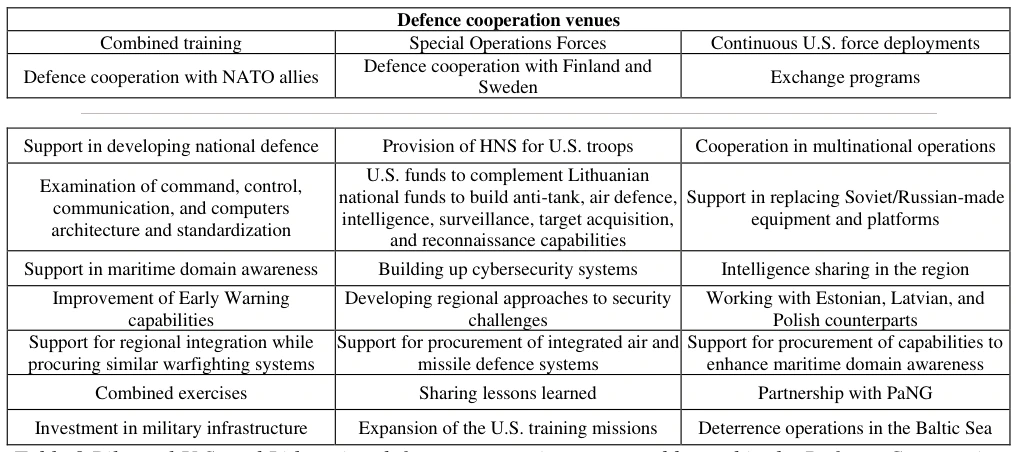
The long term Defence Cooperation Strategic Roadmap signed in 2019 was the last cornerstone in bilateral cooperation. The Roadmap defines defence cooperation priorities for 2019–2024 in areas such as the improvement of defence capabilities, intelligence sharing, surveillance, cyber security, joint exercises, and training (Table 8). The Roadmap was developed to ensure continuity and appropriate financing for long term projects. The specific details of the Roadmap could be reviewed and updated annually.
Accessible table text
| Defence cooperation venues | — | — |
|---|---|---|
| Combined training | Special Operations Forces | Continuous U.S. force deployments |
| Defence cooperation with NATO allies | Defence cooperation with Finland and Sweden | Exchange programs |
| Support in developing national defence | Provision of HNS for U.S. troops | Cooperation in multinational operations |
| Examination of command, control, communication, and computers architecture and standardization | U.S. funds to complement Lithuanian national funds to build anti-tank, air defence, intelligence, surveillance, target acquisition, and reconnaissance capabilities | Support in replacing Soviet/Russian-made equipment and platforms |
| Support in maritime domain awareness | Building up cybersecurity systems | Intelligence sharing in the region |
| Improvement of Early Warning capabilities | Developing regional approaches to security challenges | Working with Estonian, Latvian, and Polish counterparts |
| Support for regional integration while procuring similar warfighting systems | Support for procurement of integrated air and missile defence systems | Support for procurement of capabilities to enhance maritime domain awareness |
| Combined exercises | Sharing lessons learned | Partnership with PaNG |
| Investment in military infrastructure | Expansion of the U.S. training missions | Deterrence operations in the Baltic Sea |
There were plenty of technical agreements signed between the U.S. DoS and Lithuanian MoD concerning exercises and small projects such as cooperation to destroy unused ammunitions and explosives. As technical agreements specify arrangement details for already agreed upon cooperation venues, their specifics were never further analysed and therefore considered.
The most important agreement that set the extensive framework and clear procedures for implementing bilateral projects is DCA which was ratified by the Lithuanian Parliament on February 14, 2017. All other valid agreements have been flexible in order to accommodate new venues of defence cooperation development. The Defence Cooperation Strategic Roadmap highlights particular venues of bilateral defence cooperation from 2019–2024. The Roadmap indicates priorities and is scripted to ensure there is continuity and proper financing of long-term projects.
2.5. Are the U.S. and Lithuanian defence cooperation interests aligned?
Three decades of bilateral cooperation in the military field between the U.S. and Lithuania have been intensive with periods of leadership engagements. The first period of enhanced bilateral cooperation with an abundance of activities in the defence field and more frequent leadership engagements at Presidents’ and Defence Minister/Secretary’s levels occurred from 1998–2004, in the pre-NATO membership period. The second period took place from 2014–2018 and reflected on a post-Ukraine crisis when Lithuania also felt threatened by Russia. During both periods, the topic of defence cooperation was clearly on the meeting agendas at many levels including those of many political leaders and executive ministerial levels, while ultimately being written into the training scenarios for many military units and agencies involved in making the cooperation a reality. Additionally, multiple bilateral agreements were signed, while updates in the U.S. and Lithuanian strategic documents related to state security and defence went into effect in order to start putting leaders’ agreements into practice.
A comparison of outcomes following Presidential and Defence Minister/Secretary speeches and meetings (Table 4 and Table 6) seem to indicate that the Defence
Minister/Secretary agendas covered a wider array of topics as compared to the President agendas, possibly also giving a comparison of levels of competency. Some topics discussed at both levels stressed continuity whereas other topics sought only to meet short term goals. Moreover, some of the messages were not equally emphasized during engagements at various levels, e.g. the Lithuanian President described the Zapad 2017 exercise as an existential threat for Lithuanian security in the post-2014 period, while the Defence Minister did not touch on the potential impact of Zapad 2017 at all.
The comparative analysis of the long term Defence Cooperation Strategic Roadmap for 2019–2024 and the Leaders’ discussed/agreed upon cooperation venues during 2018–2020 meetings (Table 8 vs Table 4 and Table 6) show that out of 27 venues included in the Roadmap, defence cooperation was mentioned in only 16 Leader’s meetings. The other 11 venues in the Roadmap touched on defence cooperation in other aspects, e.g. defence cooperation in regards to Finland and Sweden, the sharing of lessons learned, and support during maritime domain awareness.
While considering strategic, DoD/MoD documents, speeches, meeting summaries, and Agreements, the most important and lasting venues of bilateral cooperation identified during content analysis remain the same, 1) participation in the international operations, 2) increasing LAF capabilities, and 3) having U.S. military presence in Europe and the Baltic region. The armament procurement/LAF modernization topic was one of the venues of bilateral interest, however, its validity was quite short before entering NATO and during the period of 2014–2020. The DCA and Defence Cooperation Strategic Roadmap highlight that armament acquisition is a topic pertaining to the U.S. that must continue to be exploited. This reason is because the U.S. only has the capability to provide defence articles at a sufficient price that will still allow it also cover all included expenses as in some observed cases.
3. Specifics of Armament Procurement from the U.S.
3.1. Lithuanian defence budget and armament procurements from the U.S.
Over the last 30 years, Lithuania had rises and drops in its defence spending (Table 9). The fluctuation resulted from the economic situation, the political will, security situation at any given time, and the need to allocate various percentages of funding to meet defence needs, and meet the criteria to join NATO.


During the period 1999–2005, Lithuanian spending for national defence was understood and calculated differently. Previously, the defence budget included expenses related to national security programs or projects implemented through different ministries in coordination with MoD. Examples of this included the 1st and 2nd Regiments of Ministry of Inner Affairs (the guarding of prisons and efforts to ensure public order was maintained) and counter-terrorism programs run by the Police Department (LMoD 2005).
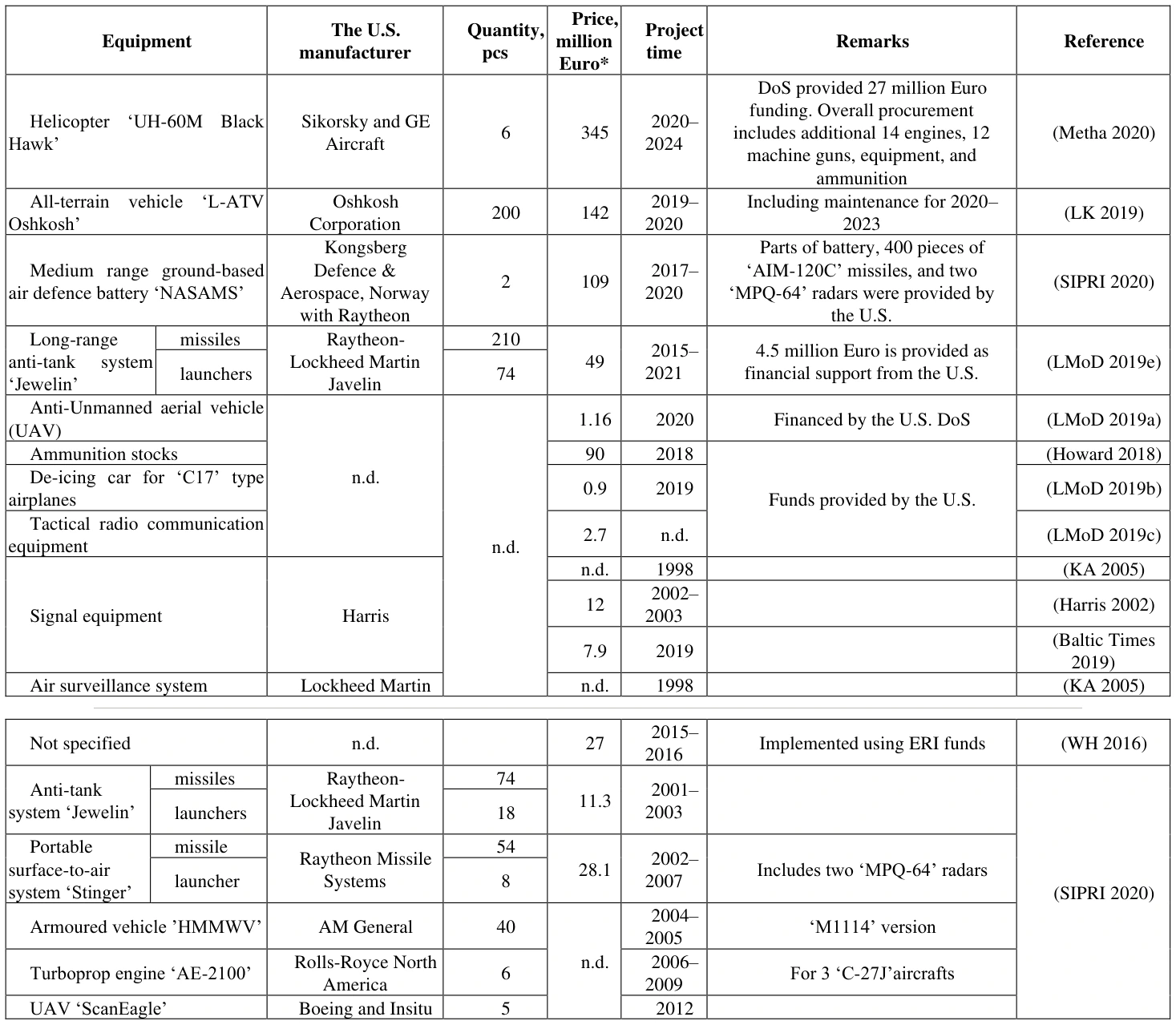
The increase of defence spending in the last decade allowed for the possibility to implement necessary reforms in the defence structure, and to plan and start acquiring defence articles required for LAF. Cooperation with the U.S. in the defence field included arms acquisition (Appendix A.1.), where the U.S. DoD/DoS donated some equipment, or else they contributed to the procurement by means of covering a percentage of the overall cost. Within the period of 2016–2020, Lithuania spent approximately 20 percent of its defence budget to acquire new modern armaments and military equipment, of which more than half was imported from the U.S. The latest procurements from the U.S. has included ‘UH-60M Black Hawk’ helicopters and ’L-ATV Oshkosh’ armoured all-terrain vehicles (Figure 4). These purchases have illustrated Lithuania’s commitment towards strengthening its defence and its desire for greater interoperability with U.S. Forces. Part of the reason the U.S. was willing to cover some of the costs for the procurements was its desire to LAF increase its defence capabilities. For example, the U.S. contributed 27 million Euro for the latest procurement of six utility helicopters, and another 4.5 million Euro for a ‘Jewelin’ antitank system. The latest U.S. program, ERI, allowed Lithuania to build up ammunition stocks, and to acquire one de-icing vehicle for C17 airplanes, tactical radios, and anti-UAV equipment. The Latest figures show that the U.S. provided over 27 million Euros worth of support to Lithuania through ERI within 2015–2016 and over 90 million Euros for the Baltic States to build its ammunition stockpile in 2018 (Howard 2018; LMoD 2019b; Metha 2020; WH 2016).
Figure 4 The ‘UH-60M Black Hawk’ helicopter (left) and the ‘L-ATV Oshkosh’ armoured all-terrain
vehicle (right) (Pictures obtained from defpost.com).
There are random speculations rather than actual statements by military leaders regarding future armament procurements for LAF. The Development Program of LNDS for 2019–2028 provides vague expectations regarding the force capability in the foreseeable future. The development program that is in line with LNSS highlights capabilities that should be developed in the short term outlook. The more precise arrangements for future military equipment and armaments should be available in due time in the MoD Guidelines and the MoD Plan. In the near future, it is expected that Lithuania will spend no less than 221 million Euros annually for acquiring new defence articles and refurbishing the old ones. The comparison of the Development Program of LNDS and Defence Cooperation Strategic Roadmap for 2019–2024 (Table 8) initially indicated that some of the future armaments could come from the U.S. because the U.S. DoD/DoS is ready to commit funds to support future Lithuanian defence developments by means of procurement of anti-tank weaponry, and enhancement of intelligence, surveillance, target acquisition, and reconnaissance capabilities. Secondly, the U.S. DoD/DoS is ready to support the Baltic States with changing out their current Soviet/Russian-made equipment with similar warfighting systems. The recent U.S. National Defence Authorization Act for Fiscal Year 2020 (No 116-92) indicates that the security assistance package to the Baltic States in 2021 will increase up to 125 million USD for the various activities that are already in place per the Defence Cooperation Strategic Roadmap. Additionally, the Committee of Appropriations report (No 116-103) for the Senate recommends an allocation of 400 million USD for the Defence Security Cooperation Agency (DSCA) to fund an air defence radar system in the Baltic region (Mix 2020).
During the existence of LAF, there have been two periods, 2004–2005 and 2018–2020, when defence spending was maintained at the 2 percent GDP level. The first period was related to Lithuania becoming a NATO member, and the second one was due to the need for LAF to gain reinforcements due to arising threats. The increase of defence spending for armament procurements positively impacted LAF. The U.S. remains to not only be the primary weapons and ammunition supplier for Lithuania, but it is also the main reliable ally assisting the LAF with the necessary funding to maintain this capability. Upcoming future arms procurement activities between the U.S. and Lithuania could be of great value as it would allow the LAF to further improve its strength and capabilities through 2028 and also add to the interoperability of U.S. and Lithuanian Forces for the foreseeable future. As the U.S. continues its support, it is important for those individuals involved to continue to learn about the U.S. arms sales programs to that Lithuania can continue to take advantage of the most prospective opportunities.
3.2. Lithuanian options to acquire arms from the U.S.
The arms acquisition process in Lithuania is slow and steady, but it is the way so that the process remains ’transparent’ for the taxpayers who have invested their money towards the defence of the country. The first step in the process is the approval of the Development Priorities of the LNDS by Seimas. Within this step is also the responsibility of the MoD to provide more specific descriptions of the mentioned capabilities which must then be approved by the Government and the Committee on the National Security and Defence in Seimas. The second step is for the LAF to determine technical requirements and specifications with the support of experts who conduct optional testing. Once requirements for future acquisition are known and the budget is prepared, the procurement takes place. The procurement process related to arms acquisition is normally run by the Defence Material Agency of the MoD which is responsible for centralized procurements. Based on EU laws and national regulations, the Lithuanian MoD can choose multiple ways to proceed with the procurement process. The MoD can follow Procurement Law in the defence field, can use an exclusion to the Procurement Law which is that it can use an international agency to support procurement, i.e. the NATO Support and Procurement Agency, simply initiate procurement based on a government-to-government (G2G) agreement (Palavenis 2022). A G2G agreement adds more transparency to procurement. An example of this is how in the U.S., all weapons sales need to be approved by different layers of Executive power and Congress has to notified.
Armament procurements from the U.S. are based on the G2G agreement, with the same procedure having being applied during the latest LAF procurement of ‘L-ATV Oshkosh’ armoured all-terrain vehicles and ‘UH-60M Black Hawk’ helicopters (LMoD 2019d). Procurement of ‘new,’ ‘used,’ or ‘excessive’ U.S. armaments could be accomplished by means of Foreign Military Sales (FMS) or Direct Commercial Sales (DCS) (DoS 2020).
FMSs are conducted by DSCA through negotiations with U.S. Defence contractors who also provide user training, maintenance training, and contracting logistical support. DSCA charges foreign buyers a 3.2 percent administrative fee and 1.2 percent FMS contract administrative services fee based on the total cost of each sale. The FMS process begins with a country submitting a formal Letter of Request that specifies the expected military capability. In most cases, foreign sales are approved by DoS and followed up with notification to Congress. Once Congress is notified, the DSCA informs the country procuring the product by means of a Letter of Offer and Acceptance that covers all the details of the sale. If the purchasing country accepts all proposed conditions, a contract is signed by both parties involved (DoS 2020; DSCA 2020b).
When conducting DCS transactions, foreign governments negotiate directly with the respective U.S. companies. In FMS and DCS situations, export licenses must be approved by the Directorate of Defence Trade Controls at the DoS. If FMF is provided by the U.S. government to support the purchase of the U.S. defence articles or services thru various programs such as ERI or the European Recapitalization Incentive Program, then the procurement process is being conducted using FMS (DoS 2020).
When excess defence equipment are purchased at a reduced price (ranging from 5–50 percent of the original purchase value), approval must be received form the DoS and Congress must be notified. The DSCA facilitates the process for the transfer of excess defence articles to other countries when the transaction is conducted using either FMS or be supported from a grant. However, Lithuania has not used these methods in the last few decades, whereas other NATO countries similar in size, i.e. Albania, Croatia, Estonia, and Slovenia have used them extensively (DoS 2020; DSCA 2020a).
To reemphasize, Lithuania strives to keep the lengthy armament procurement process as transparent as possible for the public. While acquiring defence articles from the U.S, a G2G agreement allows the purchaser to pay an optimal price, to get expert advice, and to get the support available from the DSCA. Other available options for acquiring U.S. excess defence articles are not used yet by Lithuania.
3.3. Considerations for retrospective and future arms acquisitions from the U.S.
Since other NATO countries are using U.S. equipment acquired using similar programs, an analysis could help to determine if the U.S. defence policymakers in the DoD/DoS are applying similar purchase conditions for various customer countries. One such comparative analysis which was conducted shows why Lithuania opted to procure ‘L-ATV Oshkosh’ armoured all-terrain vehicles and ‘UH-60M Black Hawk’ helicopters from the U.S. using the support of the DSCA (Table 10).

Accessible table text
| Helicopter ‘UH-60M Black Hawk’ | — | — | — | — | — | — |
|---|---|---|---|---|---|---|
| Country | Croatia | Czech Republic | Latvia | — | Lithuania | Slovakia |
| Year of procurement | 2019 | 2019 | 2018 | — | 2020 | 2015 |
| Amount procured, unit | 2 | 12 | 4 | — | 6 | 9 |
| Total cost, million USD | 115 | 800 | 200 | — | 380 | 450 |
| Estimated cost per unit, million USD | 57.5 | 66.7 | 50 | — | 63.3 | 50 |
| Armoured Vehicle ‘L-ATV Oshkosh’ | — | — | — | — | — | — |
| Country | Lithuania | — | — | United Kingdom | — | — |
| Year of procurement | 2019 | — | — | 2017 | — | — |
| Amount procured, unit | 200 | — | — | 2,747 | — | — |
| Total cost, million USD | 170.8 | — | — | 1,035 | — | — |
| Estimated cost per unit, million USD | 0.85 | — | — | 0.37 | — | — |
The latest procurements of ‘UH-60M Black Hawk’ from the U.S. were carried out by five small NATO countries. Unfortunately, each procurement per country consisted of different helicopter modifications, different quantities purchased, different training programs, and different spare part sets purchased making a comparison nearly impossible. Prices per unit differed within a 33 percent margin at costs from 50 million up to 66.7 million USD. It is also interesting to note that the U.S. DoD paid approximately 15 million USD per unit for the same helicopter configuration in 2017. The procurement prices of the vehicle ‘Oshkosh’ for Lithuania and the U.K. varied because different quantities were purchased. The approximate price per unit for the U.S. DoD was 0.25 million USD (Barrett 2017). Here again, U.S. companies sold the same defence item at different prices because the quantities and modifications requested were also different. There were however no findings to show that the policies used to offset the prices of the procurements were different for each country.
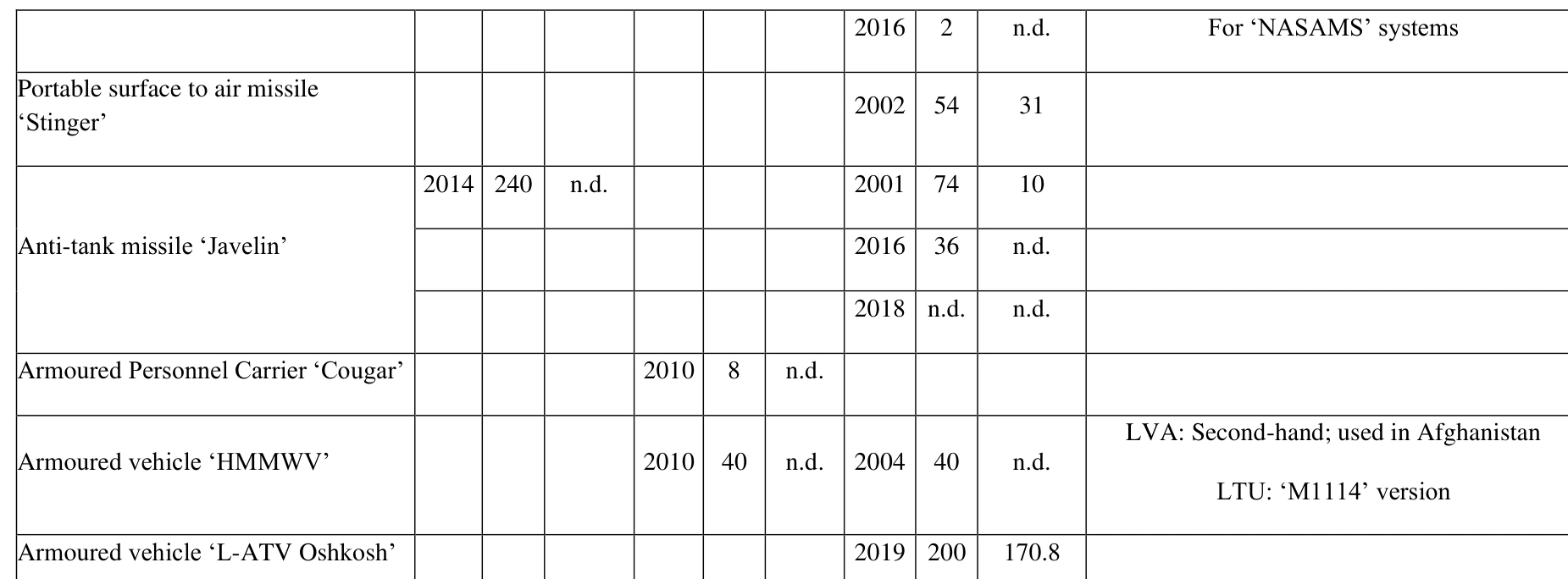
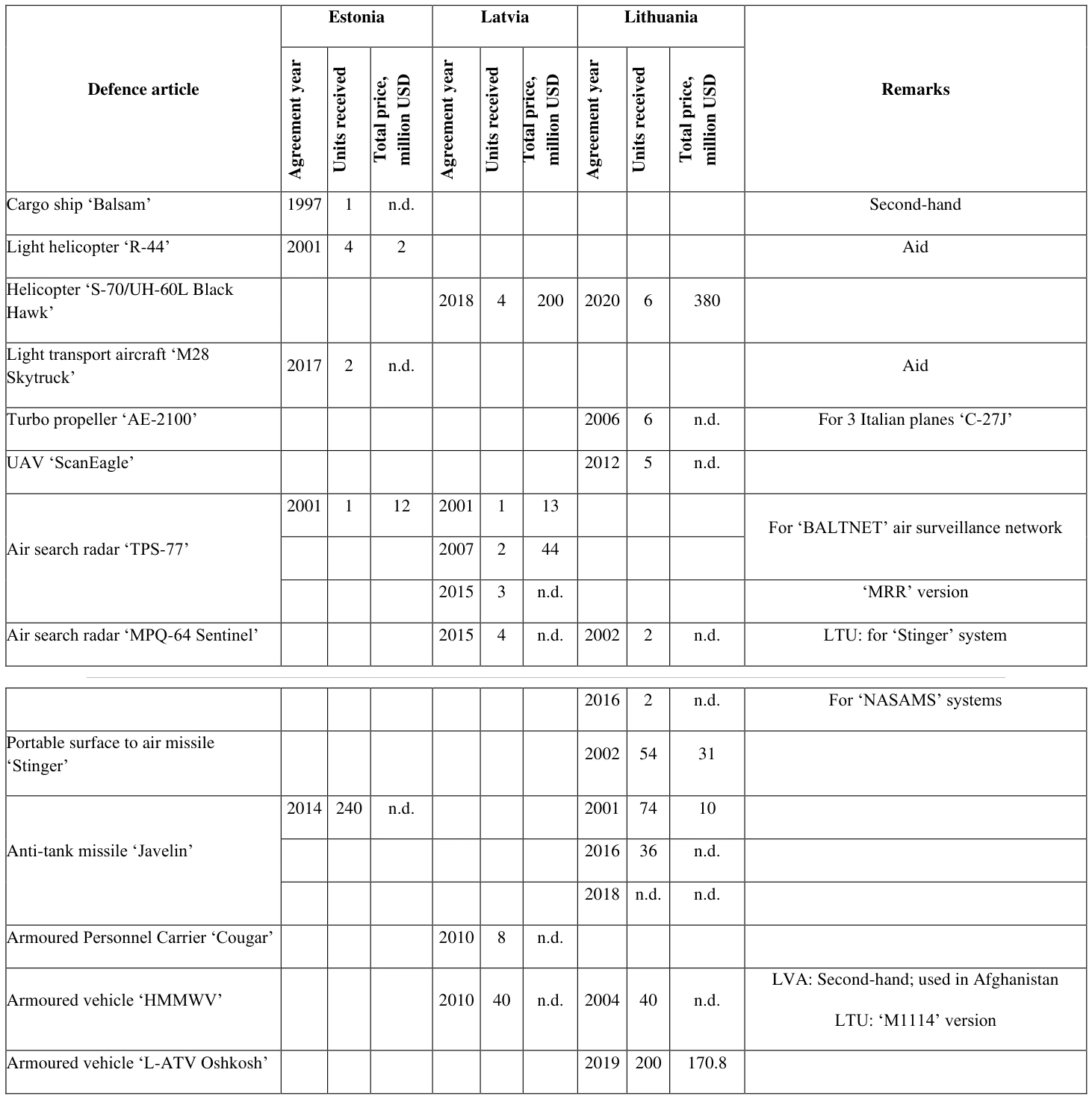
A review of the procurements by Estonia, Latvia, and Lithuania from 1990-2020 showed they each acquired varying quantities of defence equipment from the U.S. (Table 11 and Appendix A.2.), although the U.S. policies for the transactions with each country were similar.

The review showed several interesting points such as that Lithuania had procured the most number of armaments from the U.S., and four specific defence articles were acquired by more than one of the countries, but they were purchased in different years. When comparing the prices that each country paid to procure their defence items, (Appendix A.2.), one could conclude that the U.S. sets the Baltic States in a single construct pricing range. These types of construct pricing strategies seem to be established for other European regions as well.
Baltic States, including Lithuania, paid little attention to the excess defence articles program proposed by the U.S. This program allows purchasing countries to take varying amounts of grants and procure defence items at a reduced price. The latest acquisition of ‘Bradley’ infantry fighting vehicles by Croatia (120 units at a cost of 0.130 million USD per unit) and Greece (367 units at a cost of 0.106 million USD per unit), ‘HMMWV’ armoured vehicles by Albania (159 units at a cost of 0.044 million USD per unit) highlights the opportunities that the excess defence articles program can provide to other countries (DSCA 2020a). ‘Bradleys’ and ‘HMMWVs’ (Figure 5) still maintain fighting potential regardless of the production date and urgent need for modernization. How could this data relate to the current Lithuanian procurements? ‘Bradleys’ cost per unit without modernization and transportation expenses was 0.106–0.130 million USD as compared to a new ‘Boxer’ infantry fighting vehicle purchased for 4.875 million USD. The ‘HMMWV’ price was 0.044 million USD whereas the new ‘L-ATV Oshkosh’ cost 0.85 million USD. As prices differ in times, the leadership of the MoD could consider taking advantage of the U.S. excess defence articles program.

3.4. Economic factors
Considering economic figures like the imports and exports balance, it is visible (Table 12) that U.S. exports to Lithuania are not overwhelming imports from Lithuania; therefore, the trade balance remains positive for Lithuania.
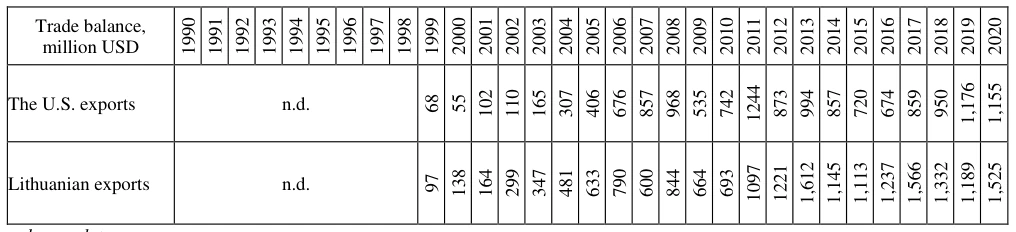
There are no specific periods when trade fluctuations are visible, thus remaining stable and constantly growing. If to assess overall Lithuanian exports and the U.S. part in it – it is pretty tiny, as the U.S. are not on the Top 10 list, which in 2020 was led by Germany, France and Russia. However, quite the opposite is in imports, where the U.S. took fifth place (lb 2021).
Main U.S. exports to Lithuania are chemicals, used machinery, electronic products, computers, and transportation equipment. In contrast, U.S. imports from Lithuania comprise petroleum and coal products, chemicals, and furniture (Mix 2020).
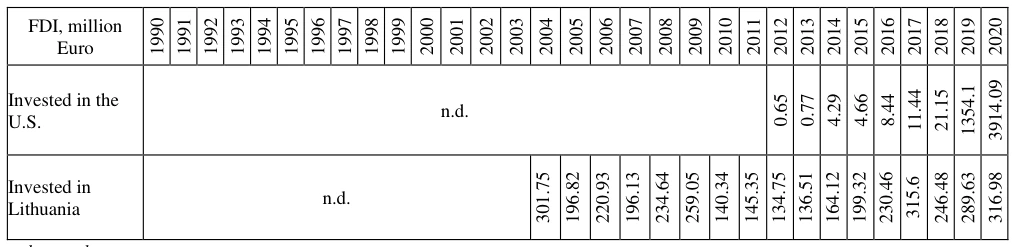
If comparing FDI (Table 13), it is visible that there has been a considerable inflow of Lithuanian FDI into the U.S. market in 2019-2020. Meanwhile, considering the U.S. investments in Lithuania, it is steadily growing with minimal fluctuations. Furthermore, it is hard to assess overall tendencies as there are substantial data gaps in FDI.
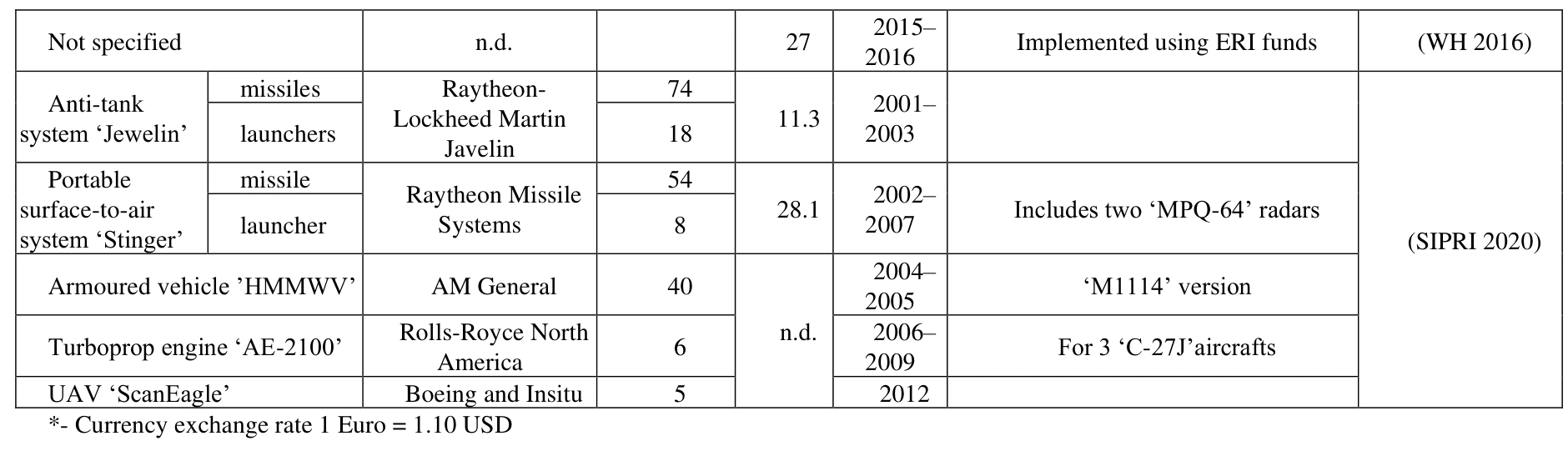
While assessing volumes of Lithuanian arms exports into the U.S. (Table 14) and the U.S. major arms imports into Lithuania (Appendix A.1.), it is evident that the U.S. exports are substantial. Nevertheless, a positive trend of increasing Lithuanian arms exports and dual-use items is present. Furthermore, Lithuanian manufacturers established a long-lasting relationship with U.S. consumers and continue to work in selected specializations.

To conclude on the economic factors influencing bilateral military cooperation: it’s evident that the U.S. continues to provide the most armaments for LAF – meaning Lithuania continues to spend most of its taxpayers' money in the U.S. However, the overall balance remains stable given positive signs of Lithuanian – U.S. trade balance and increasing competencies of the indigenous defence industry, and FDI figures.
To summarize part three, the pricing policies for U.S. defence articles remain similar in most cases regarding NATO countries unless the procurements are for large quantities. Lithuania is procuring the largest number of defence armament equipment from the U.S. as compared to Estonia and Latvia. However, at the most positive aspect of the scenario, the Baltic States could combine their military capabilities multilaterally which would likely result in a high level of appreciation for the availability of the U.S. defence procurement programs. Lithuania’s perception of the U.S. excess defence article program is that it could still be refined so that it offers reliable equipment at a more modest price. On the other hand, the acquisition of excess defence items as such still would require technical modernization resulting in additional expenses.
4. Conclusion
Bilateral cooperation between the U.S. and Lithuania over the last three decades has been intense, with defence cooperation being one of the topics that keeps both countries bound together. The support the U.S. provided to Lithuania during its aspiration to become a NATO member and active participant in deterrence related activities in the Baltic Sea region between 2014–2018 was well balanced with the Lithuanian politicalmilitary loyalty it has shown in return. The U.S. Department of Defence and Lithuanian Ministry of Defence documents highlight three main aspects of bilateral concerns regarding military cooperation: participation in international operations, enhancing Lithuanian Armed Forces’ capabilities, and ensuring there continues to be a U.S. military presence in Europe, particularly the Baltic region.
Most of the new defence cooperation initiatives started at Presidential level meetings. Bilateral talks between the U.S. and Lithuanian defence establishments have revealed that there are significant advantages in further developing defence cooperation. The Defence Cooperation Agreement and Defence Cooperation Strategic Roadmap are the most critical documents setting up the framework for cooperation and highlighting specific joint venues and ongoing projects.
Lithuania’s increased defence spending from 2004–2005 and 2018–2020 reached NATO requirements of 2 percent of Gross Domestic Product which also facilitated procurements of military equipment thru the U.S. government to government arrangements. This made possible the usage of the U.S. Foreign Military Support program to acquire armaments from the U.S., which additionally ensured optimal prices, better service, and greater transparency based on the involvement of the Defence Security Cooperation Agency. Research outcomes of the latest NATO countries’ defence equipment procurements conducted by the Defence Security Cooperation Agency in providing similar defence articles showed that prices proposed for countries were similar, with some exceptions based on varying purchase quantities and requested modifications.
Lithuania still has not sought the U.S. excess defence articles that are still in good quality and are sold at an optimal price. The analysis of recent procurements made by
Albania, Croatia, and Greece reveals the potential of the program that could be sought after by Lithuania in the future. The Baltic States could consider that opportunity and try to narrow the gap between individual and regional security interests by trying to procure armaments thru U.S. regional defence programs via trilateral or quadrilateral arrangements. However, proper synchronization would be required as there have not been very many combined armament procurements conducted within the Baltic States to this day to compare from.
Acknowledgements
My thanks to unknown scholars who took the time to review and evaluate the paper. I would also like to extend my warm thanks to Dr. Vaidotas Urbelis (Defence Policy Director at Lithuanian MoD), Dr. Alisa Palavenienė (Kaunas University of Technology, Lithuania) for their review remarks and advice. Special thanks to Mr. Will Gonzales (HQ MNCNE) for the English proofreading.
Notes
i –Valdas Adamkus returned to Lithuania after spending nearly 50 years in the U.S. He formally gave up his U.S. citizenship before his swearing in at the office of the President.
The initial version of the article was initially published at preprint.org and could be accessed: https://doi.org/10.20944/preprints202103.0556.v1.
Accessible table text
| Equipment | — | The U.S. manufacturer | Quantity, pcs | Price, million Euro* | Project time | Remarks | Reference |
|---|---|---|---|---|---|---|---|
| Helicopter ‘UH-60M Black Hawk’ | — | Sikorsky and GE Aircraft | 6 | 345 | 2020– 2024 | DoS provided 27 million Euro funding. Overall procurement includes additional 14 engines, 12 machine guns, equipment, and ammunition | (Metha 2020) |
| All-terrain vehicle ‘L-ATV Oshkosh’ | — | Oshkosh Corporation | 200 | 142 | 2019– 2020 | Including maintenance for 2020– 2023 | (LK 2019) |
| Medium range ground-based air defence battery ‘NASAMS’ | — | Kongsberg Defence & Aerospace, Norway with Raytheon | 2 | 109 | 2017– 2020 | Parts of battery, 400 pieces of ‘AIM-120C’ missiles, and two ‘MPQ-64’ radars were provided by the U.S. | (SIPRI 2020) |
| Long-range anti-tank system ‘Jewelin’ | missiles | Raytheon- Lockheed Martin Javelin | 210 | 49 | 2015– 2021 | 4.5 million Euro is provided as financial support from the U.S. | (LMoD 2019e) |
| — | launchers | — | 74 | — | — | — | — |
| Anti-Unmanned aerial vehicle (UAV) | — | n.d. | n.d. | 1.16 | 2020 | Financed by the U.S. DoS | (LMoD 2019a) |
| Ammunition stocks | — | — | — | 90 | 2018 | Funds provided by the U.S. | (Howard 2018) |
| De-icing car for ‘C17’ type airplanes | — | — | — | 0.9 | 2019 | — | (LMoD 2019b) |
| Tactical radio communication equipment | — | — | — | 2.7 | n.d. | — | (LMoD 2019c) |
| Signal equipment | — | Harris | — | n.d. | 1998 | — | (KA 2005) |
| — | — | — | — | 12 | 2002– 2003 | — | (Harris 2002) |
| — | — | — | — | 7.9 | 2019 | — | (Baltic Times 2019) |
| Air surveillance system Not specified | — | Lockheed Martin n.d. | — | n.d. 27 | 1998 2015– 2016 | Implemented using ERI funds | (KA 2005) (WH 2016) |
| Anti-tank system ‘Jewelin’ | missiles | Raytheon- Lockheed Martin Javelin | 74 | 11.3 | 2001– 2003 | — | (SIPRI 2020) |
| — | launchers | — | 18 | — | — | — | — |
| Portable surface-to-air system ‘Stinger’ | missile | Raytheon Missile Systems | 54 | 28.1 | 2002– 2007 | Includes two ‘MPQ-64’ radars | — |
| — | launcher | — | 8 | — | — | — | — |
| Armoured vehicle ’HMMWV’ | — | AM General | 40 | n.d. | 2004– 2005 | ‘M1114’ version | — |
| Turboprop engine ‘AE-2100’ | — | Rolls-Royce North America | 6 | — | 2006– 2009 | For 3 ‘C-27J’aircrafts | — |
| UAV ‘ScanEagle’ | — | Boeing and Insitu | 5 | — | 2012 | — | — |
Accessible table text
| Defence article | Estonia | — | — | Latvia | — | — | Lithuania | — | — | Remarks |
|---|---|---|---|---|---|---|---|---|---|---|
| — | Agreement year | Units received | Total price, million USD | Agreement year | Units received | Total price, million USD | Agreement year | Units received | Total price, million USD | — |
| Cargo ship ‘Balsam’ | 1997 | 1 | n.d. | — | — | — | — | — | — | Second-hand |
| Light helicopter ‘R-44’ | 2001 | 4 | 2 | — | — | — | — | — | — | Aid |
| Helicopter ‘S-70/UH-60L Black Hawk’ | — | — | — | 2018 | 4 | 200 | 2020 | 6 | 380 | — |
| Light transport aircraft ‘M28 Skytruck’ | 2017 | 2 | n.d. | — | — | — | — | — | — | Aid |
| Turbo propeller ‘AE-2100’ | — | — | — | — | — | — | 2006 | 6 | n.d. | For 3 Italian planes ‘C-27J’ |
| UAV ‘ScanEagle’ | — | — | — | — | — | — | 2012 | 5 | n.d. | — |
| Air search radar ‘TPS-77’ | 2001 | 1 | 12 | 2001 | 1 | 13 | — | — | — | For ‘BALTNET’ air surveillance network |
| — | — | — | — | 2007 | 2 | 44 | — | — | — | — |
| — | — | — | — | 2015 | 3 | n.d. | — | — | — | ‘MRR’ version |
| Air search radar ‘MPQ-64 Sentinel’ | — | — | — | 2015 | 4 | n.d. | 2002 2016 | 2 2 | n.d. n.d. | LTU: for ‘Stinger’ system For ‘NASAMS’ systems |
| Portable surface to air missile ‘Stinger’ | — | — | — | — | — | — | 2002 | 54 | 31 | — |
| Anti-tank missile ‘Javelin’ | 2014 | 240 | n.d. | — | — | — | 2001 | 74 | 10 | — |
| — | — | — | — | — | — | — | 2016 | 36 | n.d. | — |
| — | — | — | — | — | — | — | 2018 | n.d. | n.d. | — |
| Armoured Personnel Carrier ‘Cougar’ | — | — | — | 2010 | 8 | n.d. | — | — | — | — |
| Armoured vehicle ‘HMMWV’ | — | — | — | 2010 | 40 | n.d. | 2004 | 40 | n.d. | LVA: Second-hand; used in Afghanistan LTU: ‘M1114’ version |
| Armoured vehicle ‘L-ATV Oshkosh’ | — | — | — | — | — | — | 2019 | 200 | 170.8 | — |