 Journal of Global Trade, Ethics and Law
1. Introduction
Economist all over the world are united in maintaining that boosting intra-regional trade is an important driver of economic growth. This holds for Africa too which, however, with its share below 3% has so far only a marginal role in world trade (Cessac 2019). On 21 March 2018, the leaders of the African Union (AU) signed the new African Continental Free Trade Area (AfCFTA; ZLECA or ZlEC, in French) in Kigali, Rwanda in order to create a single market for goods and services. The AfCFTA is a key element of the AU’s ambitious Agenda 2063 (see below). The agreement committed participating countries in general to remove tariffs on 90% of ‘non sensitive’ goods, to progressively liberalize trade in services, and address multiple other non-tariff barrier to trade. This would make Africa the largest free trade area in the world. Moreover, its scope exceeds that of a traditional free trade area because it is complemented by other continental initiatives, including the Protocol on Free Movement of Persons, Right to Residence and Right to Establishment, and the Single African Air Transport Market (SAATM) (Songwe, 2019) and the Protocol on Rules and Procedures on the Settlement of Disputes (phase 1) and the Protocol on Investment, the Protocol on Competition and the Protocol on Intellectual Property Rights (phase 2) (UNCTAD 2019, 3).
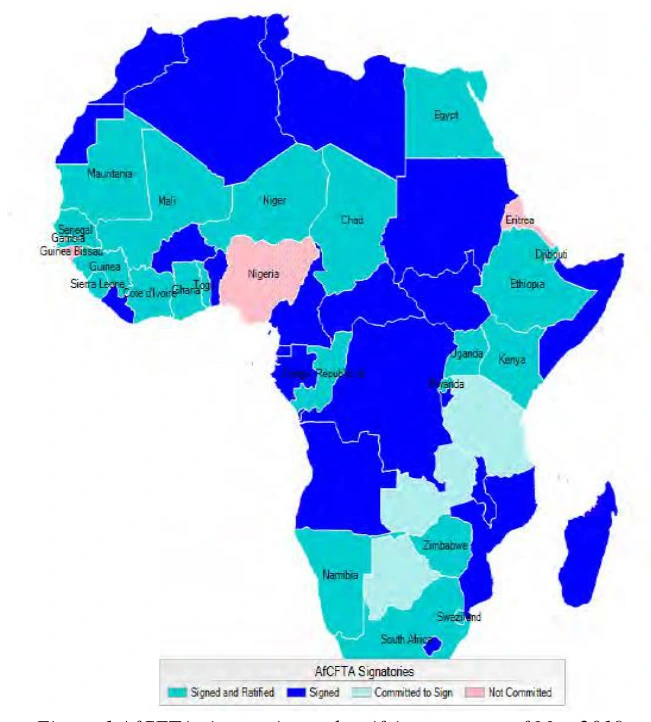
The AfCFTA was heralded as a milestone for regional integration and continental unity leading ultimately to a future African Economic Community (AEC). The latter would be the last of six successive stages that involve sectoral cooperation, strengthening Regional Economic Communities (RECs) and finally a continental customs union, a common market and a monetary and economic union (ECA 2012, xv; Luke & MacLeod 2019).
2. Economics of regional and continental integration in Africa
Once completed, the AfCTA would embrace up to 55 AU member states, a market of 1.2 bn people with a combined GDP of 2.5 trillion US dollars (IMF 2019, 72). 1 According to the Economic Commission for Africa (ECA), this would constitute a winwin situation for African countries in terms of intra-African export growth and overall welfare (UN-ECA 2018, 4-5; Luke & MacLeod 2019, 67-164). According to UNCTAD too, Africa would benefit overall from the agreement, which should bring about $16.1 billion in welfare gains (UNCTAD 2018, 1).
Moreover, many of these gains could not been realised if rules of origin will not be designed properly and enforced, they are considered by UNCTAD as key to success of AfCTA (UNCTAD 2019).
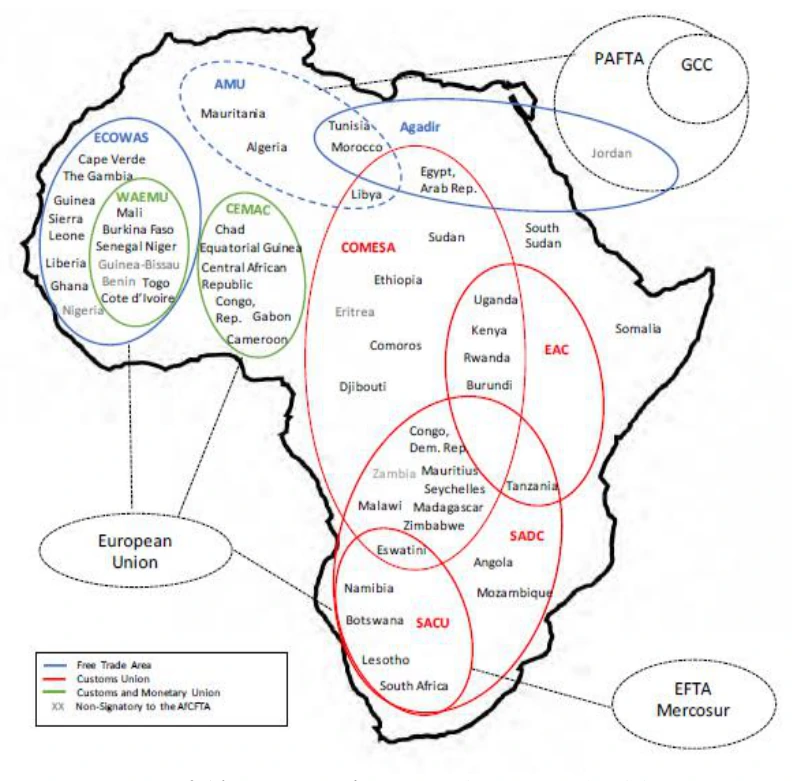
African leaders integration vision was to be realized first by the consolidation and strengthening of the eight regional economic communities (RECs) already recognized by the AU. The RECs were expected to serve as building blocks and regional growth poles for the envisaged African Economic Community (AEC) (ECA 2012, 3, 11-12). Meanwhile, most African countries are part of RECs, and 75 % of intra-regional trade took place in the five most important RECs in 2017, with the SADC alone accounting for half of such trade flows (IMF 2019a, 43).
1 Up to 4 July 2019 all 55 AU-members had signed the AfCFTA, except Eritrea. Hesitant Nigeria had announced its intention to join the AfCFTA only on 3 July, shortly before the 12th AU-summit in Niamey, that started on 4 July 2019. AfCFTA has been legally entered into force already on 30 May 2019 with the ratification by Sierra Leone and the Saharawi Republic which met the minimum threshold of 22 countries having ratified, which is required under Article 23 of the AfCFTA agreement as precondition to enter into force (Mutesi 2019). Up to 7 July 2019 altogether 27 countries had ratified (rfi-Afrique 2019).
However, there are still major stumbling blocks on the road to success. At the 12th AU-summit in Niamey (4 to 8 July 2019) five major areas of clarification and negotiation were identified (here and in the following, Cessac 2019):
First, institutions will have to be created to conduct and co-ordinate the future negotiation process. These include notably the headquarters of the permanent AfCFTA general secretary and its host country.3 The secretary would have to manage among others the harmonization of tariffs and the definition of rules of origin. Another body to be created would be the African Trade Observatory with the task to supervise the technical and legal aspects of the agreement and to propose solutions for the harmonisation to the secretariat.
2 “Dotted border for AMU indicates the free trade area is not fully implemented. AMU, Arab Maghreb Union; CEMAC, Economic and Monetary Union of Central Africa; COMESA, Common Market for Eastern and Southern Africa; EAC, East African Community; ECOWAS, Economic Community of West African States; EFTA, European Free Trade Association; EU, European Union; GCC, Gulf Cooperation Council; Mecosur, Southern Cone Common Market; PAFTA, Pan-Arab Free Trade Area; SACU, Southern African Customs Union; SADC, Southern African Development Community; WAEMU, West African Economic and Monetary Union.” (IMF 2019, 36).
3 Potential candidates were Egypt, Kenya, Ghana, and Madagascar (Cessac 2019).
Second, a list of tariff-free products and services will have to be agreed upon which should comprise lastly 90% of ‘non-sensitive’ tariff-lines in the liberalized African market over a transition period of five years valid for the 21 non-least developed countries, and ten years for the 33 least developed countries (LDCs). Some 90% of all tariff lines would be subject to progressive tariff cuts. The remaining 10% of tariff lines would include ‘sensitive products’ that could be liberalized over ten years by the nonleast developed countries and 13 years by LDCs as well as a carefully identified list of goods excluded from liberalization (UNCTAD 2018, 2). This will include the arduous task of identifying exemptions from liberalization by each country concerned.
Third, common rules of origin will have to be assigned, including thresholds on the proportion of ‘African’ inputs that qualify for being considered ‘Made in Africa’. A threshold of 50% has been proposed, but already disputed by concerned governments, NGOs and Civil Society Organisations (CSOs) in both directions (for details see, UNCTAD 2019).
Fourth, the hairy question of non-tariff barriers to trade will have to be solved. As a fist measure, online platforms to deal with complaints about non-tariff barriers have been suggested, based on the example of the Tripartite Free Trade Area 4 that apparently had resolved already 85% of complaints in that area since 2010. A study of the Afreximbank estimated that the gains of tariff liberalization by AfCFTA to the tune of US$ 3.5bn could be increased to US$ 17bn if all non-tariff barriers would be eliminated too (Cessac 2019).
Last, but not least, a continent-wide system of convertible currencies would have to be established. The Afreximbank, which has been proposed as future clearing-house, has designed already a system especially suited for small and middle enterprises, still based on the own currencies of buyers and sellers, to facilitate international payments.
Whereas, according to the AU’s ambitious forecasts, intra-African trade will increase by up to 60% by 2022, model-calculations by the UNCTAD are less optimistic. They foresee trade increase of 15% to 25% up to 2040, in absolute figures 50 to 70 bn US$, depending on the degree of liberalization (faz 2019). Critics of the AfCFTA, such as the Third World Network Africa (TWN-Africa, Accra), the African Center For Children Rignts (C.A.D.E. Kinshasa, DR Congo), and the Committee for the Abolition of Illegitimate Debt (CADTM, Liège, Belgium) remain sceptic (Cessac 2019). For example, they refer to the lack of complementary of most African economies and the subsequent danger that the dumping of cheap imports could harm especially the smaller producers in agriculture, manufacture and nascent local industries. According to TWA-Africa, problems are to be expected notably in the African agro food sector. They fear that primarily multinational companies with African subsidiaries are likely to benefit from AfCFTA and that the gap between the rich and the poor African producers and countries would be further accelerated (Cessac 2019).
4 The Tripartite Free Trade Area comprises the Common Market for Eastern and Southern Africa, the Southern African Development Community and the East African Community.
One pre-condition of boosting trade by the AfCFTA would be that the question of existing multiple non-tariff barriers to trade would be solved, which are especially pronounced in West Africa with its large share of informal sector. For example, more than 85% of businesses active in Togo operate in the informal sector according to the latest global business survey carried out across the country by the national statistics institute (INSEED; Togo-First 2019). The share of the informal sector in neighbouring Benin has been estimated by the IMF around 50% and in Nigeria 65% (IMF 2019, 72-75; Medina et al 2017, 13). Secondly, Nigeria, by far the biggest and most influential African economy next to South Africa, sign the treaty only hesitantly, last but not least, because it wanted to protect its infant industry. Only under pressure from its peers and influential Nigerian businessmen such as billionaire Aliko Dangote, Nigeria’s president Buhari finally decided to join the AfCFTA on the eve of the 12th AU-summit in Niamey on 4 July 2019 (Cessac 2019). This reluctance the more remarkable as it contrasted sharply with Nigeria’s former role of spearheading African integration, e.g. concerning the fight for independence of Zimbabwe and to end South African’s Apartheid regime. Evidently, the driving force behind Nigeria’s uncompromising stance in the early days of Africa’s liberation from the bonds of colonialism were shared moral values and ethics, even if it would negatively affect the country’s economy (Uche Ordu 2019).
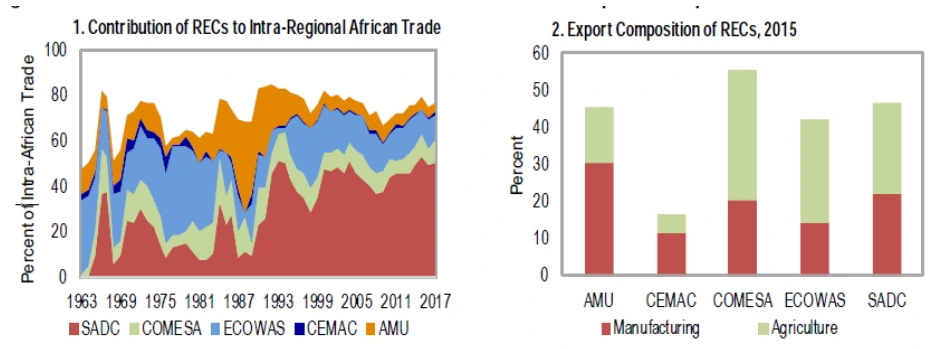
5 “Source: United Nations COMTRADE Database and IMF staff calculations. Note: AMU = Arab Maghreb Union; CEMAC = Central African Economic and Monetary Community; COMESA = Common Market for Eastern and Southern Africa; ECOWAS = Economic Community of West African States; SADC = Southern Africa Development Community.” (IMF 2019, 37).
In short, the AfCFTA is based on high-flying visions indeed in view of the ambiguous progress of regional integration since the surge of African RECs in the 1970s and the varying commitment of governments to support it. While characterized by ambitious targets, they have had a dismally poor implementation record (Hartzenberg 2011). Apparently, lacking political will to yield sovereignty, missing sense of regional identity, trust and common interests, have been identified as major causes of poor performing regional institutions. The latter are in the end only what individual member states wish them to be (Tavares & Tang 2011, 226).
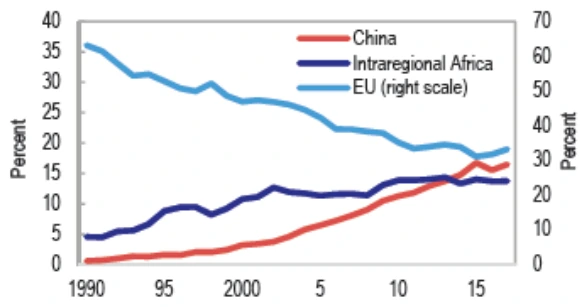
This may have been one of the reasons why the United Nations Economic Commission for Africa (ECA) cautioned already in its base-line study of the AfCFTA in 2012 that the reluctance of some countries ‘to liberalize their borders to trade is a common concern and may only be overcome if the gains from such liberalization are shared’ (ECA 2012, 4-5). This holds the more so, because intra-regional trade within Sub-Sahara Africa remained rather low, although it increased substantially in the past three decades from approximately 5 % in 1990 to about 12 % in 20176 and estimated 15% to 17% in 2019 (see figure 2). In contrast, almost two thirds of African exports go to Europe. This compares unfavourably to intra-trade levels in Europe (69%), Asia (59%), and North America (31%) (Songwe 2019, 98).
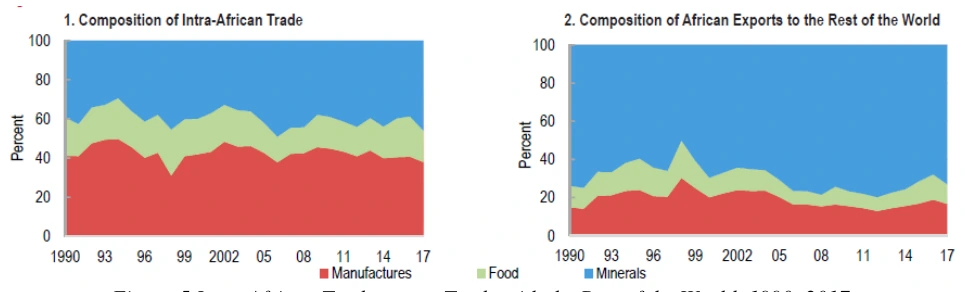
In contrast to Africa’s export to the outside world, which was mainly focused on raw materials, notably minerals (e.g. oil and copper), intra-regional exports within the African continent were more diversified and had a higher technological content (IMF 2019 a, 42; see figure 3).
6 “These statistics underestimate actual intraregional trade flows though, as they do not capture widespread informal cross-border trade. Nevertheless, the share of trade with African countries by 2017 was surpassed only by trade with the European Union and with China, which has been rising fast in the past decade.” (IMF 2019a)
7 “Sources: UN-COMTRADE database; and IMF staff calculations. - Note: Trades shares are defined as the average of two ratios: (1) Share in total African exports and (2) share in total African imports. EU = European Union” (IMF 2019a, 41).
In summary, there are still serious limiting factors of regional integration, like the poor infrastructure development, the large informal sector, contested rules of origin and other non-tariff barriers to trade, and last but not least, lacking political will of the African national elites to cede national sovereignty in favour of pushing forward regional integration. Moreover, repeated resurgence of pan-Africanism since the early days of African independence in the 1960 and the call for African Renaissance in the 1990th were countered by new nationalism (Kohnert 2009) impeding effective regional integration.
While it is broadly recognized that globalization and increased world-wide trade resulted in substantial growth in the past three decades, its gains apparently have not been fairly distributed.8 Although global poverty decreased, prosperity has not been shared (Songwe 2019, 97). Today, seven of the 10 most unequal countries worldwide are located in Africa (Index-Mundi, quoted in IMF 2019a, 50).
Under these conditions, neither economic incentives along Ricardian comparative advantages of trade nor monetary compensation for those countries that do not profit directly from liberalization, as strongly recommended by the ECA, will suffice to guarantee the success of the AfCFTA. This the more so, because the distribution of gains of increased trade openness induced by AfCFTA will probably remain quite uneven which could affect the already highly skewed income distribution even further.
Forecasts of the probable effects of increased trade openness, induced by the AfCFTA, on income inequality suggest though a significant difference between agricultural- and natural-resource-based African economies on the one hand and manufacturing exporters on the other. Whereas in the former inequality would decrease slightly by 4.6%,9 in the latter trade openness would increase inequality by 1.5% (IMF 2019a, 50). A recent UNCTAD study cautioned that the success of AfCFTA in a more competitive global economy would require also to assist the potential losers through job retraining, targeted social protection and other welfare measures that mitigate the negative effects (UNCTAD 2019, 10).
8 “The World Bank population-weighted Gini index shows that inequality rose steeply between 1988 and 1998 and declined only moderately by 2013.” (Songwe 2019, 98).
9 “In natural resource exporters, inequality decreases less than in the case of an agricultural exporter. While natural resource activities are capital intensive and favor richer capital owners, these activities are also taxed more heavily, providing additional resources for redistribution.” (IMF 2019a, 50, Fn.12).
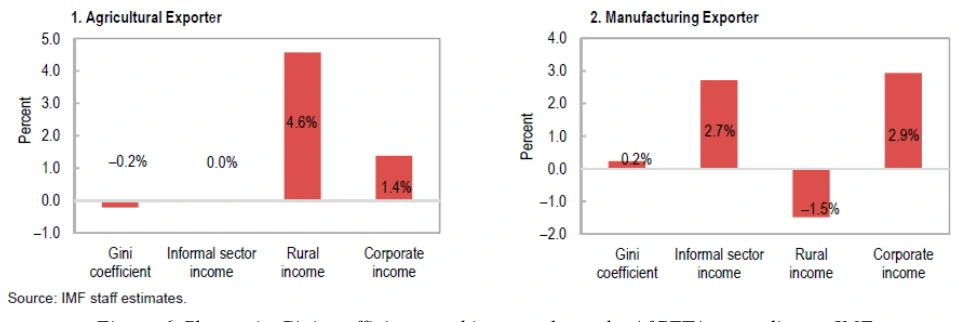
According to the IMF, the impact of the AfCFTA on the inequality of income distribution would be even greater, if the large informal sector, that is generally associated with higher inequality, would not shield a large share of the population against negative impact of formal trade openness (IMF 2019a, 51). However, this ‘shielding effect’ – which in itself already contributes to increasing inequality as recognized by the IMF (see above) - would only be effective under the heroic assumption that the informal sector is producing mainly non-tradable goods and services, which are not affected by increased trade-openness (IMF 2019a, 51, Fn13). This assumption seems to be quite unrealistic in view of available studies on informal trade in West Africa (Golup 2012; Kohnert 2016) and elsewhere in Africa. Consequently, income inequality induced by AfCFTA would probably be considerably greater because the shielding effect will be less pronounced than assumed.
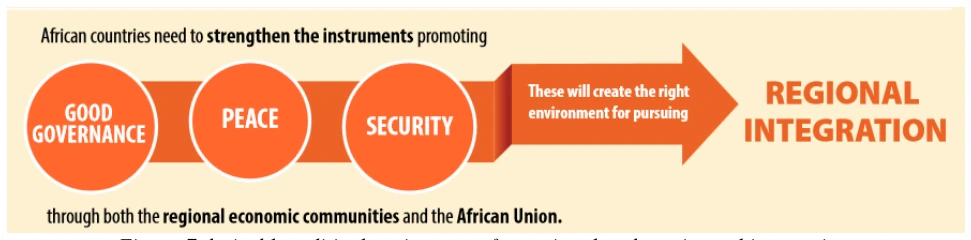
Yet, even for the ECA, implementing the AfCFTA is about more than trade. ‘It is about dispelling the “crisis of implementation” of AU decisions and initiatives and validating the African Union and its Agenda 2063. It is a litmus test of the commitment of African countries to economic integration.’ (ECA et al 2019, 64). Consequently, there are supplementary variables to be accounted for if one wants to evaluate the chances of African regional and continental integration. By now, it should be clear that the balance between the ‘politics of the belly’ (Bayart 1993) and shared ethics play a central role in the African economic integration process too. While there exist a wealth of literature on the adverse effects of the ‘politics of the belly’ (Bayart 1993; Berman 1998; Daloz 2018), ethics are rarely thematised in the context of African regional integration. Yet, possibly even different ethics will be required for the successive stages of African economic integration: firstly, ethics focussed on integration, and subsequently ethics centred on participation in order to consolidate the gains of integration, like in the building process of the European Union (Bellamy & Warleigh 1998). The ethics of participation would include also human rights, conflict prevention and peace building. Two of the RECs, the ECOWAS and SADC made already a first step in this direction in encouraging ‘good governance’, the rule of law and respect for peace, democracy and human rights (Brown 2005).
3. Ethical dimensions of African integration
3.1. African aspirations
When the African leaders celebrated the 50th anniversary of the OAU in 2013, the predecessor of the AU, Pan-Africanism as well as Africa’s cultural heritage and its renaissance, its integrity and further development, figured high on the agenda for obvious reasons. The leaders committed themselves to eight key ‘priority areas’ for development, among them African renaissance, continental integration, and inclusive social and economic development (AUC 2014, 6; DeGhetto et al 2016, 93). Based on these ‘priority areas’ they launched the Continental Agenda 2063, i.e. ‘Africa’s blueprint and master plan for transforming Africa into the global powerhouse of the future’ (AU 2016, 2). The Agenda 2063 embraced seven major ‘aspirations’, including the vision of ‘an integrated continent, politically united based on the ideals of Pan Africanism and the vision of Africa’s Renaissance, (Aspiration 2)’, ‘an Africa with a strong cultural identity, common heritage, shared values and ethics (Aspiration 5)’10 as well as ‘people-driven development, relying on the potential of African people … (Aspiration 6)’ (AU 2016, 2; DeGhetto et al 2016, 95). A program with detailed goals, priority areas, targets and indicative strategies, flagship programmes and a first 10-year implementation-plan were presented with Agenda 2063 framework document (AU 2015).11
10 Comprising the goal of “Africa cultural renaissance … inculcating the spirit of Pan Africanism; tapping Africa’s rich heritage and culture to ensure that the creative arts are major contributors to Africa’s growth and transformation; and restoring and preserving Africa’s cultural heritage, including its languages.” – “We aspire that by 2063: • Pan Africanism will be fully entrenched; • The African Renaissance has reached its peak; Culture, heritage and a common identity and destiny will be the centre of all our strategies so as to facilitate a Pan-African approach and the African Renaissance.” (AU 2016, 8).
In short, continental integration was (only) one of eight priority areas, and it remains to be seen in how far African governments are really committed to implement the agenda and to yield national sovereignty despite all enthusiastic rhetoric of the documents and public talks of African leaders. One of the key questions in this respect is the question of ownership which unfortunately, had not been addressed in the Agenda 2063 plan of action (DeGhetto et al 2016, 98-99):12 Do all the signatory countries have the same understanding and a shared roadmap to attain the AfCFTA in spite of differing cost and benefits?
Apparently, shared understanding of the AfCFTA depends to a significant extend on shared values and ethics. However, it is open to question whether there exists a distinctive African view on fairness and retributive justice, supposedly the most important ethics in this respect. On the contrary, according to lessons learned from recent scholarly studies, an unique single framework of an African ethic does not exist, but a chorus of different voices (Murove, 2009). Although these voices contain distinctive common strands, the latter apply typically only to specific contexts and social groups. Moreover, African ethics, like ethics worldwide, are not static and engraved once and for all, but continuously developing and adapting to current conditions (Nicolson 2008).
Up to now, the ethics of integration in Africa concerned mainly an elite-driven process of regional and continental integration, i.e. a discreet policy of integration pushed by governments and background lobby groups of major economic players involved. In this respect, the ethics of African integration resemble that of European ‘integration by stealth’, an expression borrowed from Bellamy & Warleigh (1998, 453-455). That is, in the early phase of integration the general public has been treated largely as passive and acquiescent. However, the newly created institutions and forums of integration and conflict resolution provided also for an ongoing and gradual shift of loyalty of national elites to new supra-national (regional and continental) centres of decision and created thereby additional trans-national arenas of power-play with repercussions on the national and sub-national level.
11 In addition, an AU Ethics Office was established in July 2016 as an independent advisory body superintending ethical matters in all African Union Organs, institutions and offices. Its key goals are too cultivate an enduring respect for ethical principles and standards derived from the African Union values as well as promote good governance.
12 “Who owns Agenda 2063? Is it the AU and its organs, the heads of states and governments who originated the idea, the AU member states, the regional bureaucrats and technocrats (New Economic Partnership for Africa (NEPAD); African Development Bank (AfDB); United Nations Economic Commission for Africa (UNECA)), the people and societies of Africa and her diaspora, or some combination of the above? Indeed, the AUC asserts that prior continental frameworks (e.g. Lagos Plan of Action, Abuja Treaty) demonstrate that the citizens of Africa must own the process and outcome of Agenda 2063, but the question of ownership needs to be further clarified because it has significant implications for buy-in, commitment, resourcing, monitoring, and effective and sustaining implementation.” (DeGhetto et al 2016, 98-99).
As long as African integration remains a process driven by the political and economic power-elite the question of ownership applies apparently for the ethical guidelines as well that drive this process. That is, first of all, we have to focus on the ethics of this power-elite.
Moral values in Africa and elsewhere are directly related to social class and class consciousness. It determines the common scale of values and ethics and is the driving force behind the class’s social agency. Apart from the evident pan-African principles mentioned above, there are other ethics that come into play. Even if these often act rather oblique they are not necessarily less important. These beliefs are determined to a great extent by religion. In fact, religion provides according to Siegfried F. Nadel (1954, 259) an ‘economic ethic’, i.e. ‘normative ethic’ in the language of current social and political philosophy, which provide guidelines for action. In the realm of politics these break down to political or public ethics.
Following Max Weber’s social psychology of world religions, this has been confirmed for Africa already 80 years ago by a classic of ethnology of African societies and religions, i.e. S. F. Nadel’s painstaking case study of the Nupe in the 1930 and 1940s (Nadel 1942, 123). Nadel analysed in detail the long-established distinct standards of moral order and values for the nobility and the ‘commoner’ in colonial Northern Nigeria that are largely based on religion. That is, more exactly on religions in plural, because in Nupeland, as elsewhere in Africa, different sources of missionary efforts of Muslim and Christian warriors and missionaries that conquered the Nupe in the past centuries, intermingled so closely with the ‘pagan’ beliefs they encountered locally (Nadel 1954, 259) that a separate analysis is hardly possible and justified only out of academic scrutiny in an ideal-typically sense. Although meanwhile about 80 years old, these ‘economic ethics’ have been uphold to a large extend up to date (Kohnert 1982; Muhammad 2017). Presumably, this holds for the whole of Sub-Sahara Africa, at least concerning the basic traits of African ‘economic’ or normative ethics.
In the following, I shall therefore focus on ethics and moral guidelines provided by the most influential religions in Africa, i.e. Christianism, Islam and traditional African religions and its implications for regional and continental integration. Certainly, it is not to be excluded that there are also other sources of moral codes than religion, e.g. established ancient custom, often restricted to local settings, ethnic- and regional networks and even the extended family. Last, but not least, we must not forget the strong influence of Western philosophical traditions, including political liberation theories, imported from the West in the course of the first and second liberation of Africa, and the impact of African independence movements on contemporary African ethics. Therefore, Gyekye and others caution about a too rigid concentration on Islam and Christian belief in dealing with African ethic (Gyekye 2010). Nevertheless, the broad spectre, relevant for the discussion of the impact of ethics on African regional integration, will be encompassed by the focus on the religious base of ethos and the derived agency of the power-elite, at least, if we include traditional African religions as well. This the more so, because in Africa it is rather the rule than the exception that a true believer, both of Christianism and Islam, is convinced that the faith in crucial elements of African religions, last, but not least in the occult, like witchcraft, is perfectly compatible with the restrictions of monotheism (Geschiere 1997; Kohnert 2007).
3.2. Modern Christian movements : an answer to counteract Africa’s increasing integration into globalized capitalism ?
At this point, the articulation between traditional and modern African values and ethics becomes relevant. Africanists observed that the rise of global capitalism especially in Africa has been enhanced and consolidated by new Christian movements that offer to explain the seemingly inexplicable trends induced by the moral economy of global capitalism, like the reification of social relations, increasing materialism, egoism and social cleavages between the rich and the poor (Comaroff & Comaroff 2000, 307-308). It is not by chance that the connection between globalised capitalism and occult economics which took place in the wake of the second wind of change in the 1990s in sub-Saharan Africa reminds of a manifestation of Marxist concepts of alienation (Entfremdung), objectification (Vergegenständlichung), and commodity fetishism in the spiritual African world (Kohnert 2007, 44). The new protestant ethics of capitalism, that have been offered by Pentecostal churches mushrooming all over Sub-Saharan Africa, apparently provide convincing answers – tailored to their own needs and to boost their personal gains - by articulating occult believe systems of African traditional religions with adapted modern Christian believes in witchcraft and sorcery (Geschiere 1997; Kohnert 2007). Thus, in Benin, Ghana, Nigeria, and other countries all over Sub-Sahara Africa, faithful new-born Christians looked for comfort and spiritual protection from the diabolic powers of the world market. Quite worldly problems, such as diminishing terms of trade, falling farm-gate prices of local export crops, increasing unemployment, and indebtedness were explained within the context of their religion. The concerned population might even see in these witch-hunters heroes who cleanse their areas of evil, rather than view them as evil itself. Thus, under certain historical conditions, witchhunts constitute what Peter Geschiere (1997), quoting D. C. Martin, called a "popular mode of political action", directed towards promoting the dawn of a new democratic order, towards equalizing the distribution of income and wealth, or towards, defending the ideal of solidarity within acephalous village communities (Kohnert 2007, 47).
Within the realm of informal politics too, the systems of checks and balances has been connected repeatedly to ‘vodun politics’, i.e. the active involvement of secret cults, the politics of vigilance and ritual murder for example in Nigeria. The power which secret cults in Nigeria wield in contemporary life and in regional politics is still considerable, and has been continuously adjusted to the requirements of modern politics, from pre-colonial times up to present-day political structures of formal multiparty democracy (Kohnert 2007, 44).
In the nascent capitalist order in Africa apparently one of the most promising ways to acquire economic and political power lies in the transgression of established moral in order to produce sur-plus value by all available means, fair or foul (Comaroff &
Comaroff 2000, 308). In principle, the religious-ethical legitimation of the selfish pursuit of worldly wealth by rewarding it in heaven is nothing new, although this has been considered to be highly unethical in African traditional religions (see below). In fact it has been explored in detail since the publications by Adam Smith, the founder of classical economy theory. He maintains in his Wealth of Nations that the self-centred pursuit of one’s own interest promotes unintentionally - guided by the invisible hand of the market – the societal gain even more efficiently as if man would actively intend to promote it. His theory was complemented and developed further by Max Weber’s pathbreaking analyses on the Protestant Ethic and the Spirit of Capitalism.13
Yet, in modern Africa, the occult aspects of African religions that have been incorporated into protestant ethics and have been instrumentalized since long by Muslim African rulers as well, are not restricted to the realm of economics. They extend to power-politics of national elites too. Cases studies are abound. They stretch from the alleged ‘poisoning’ scandals of political adversaries for the presidency in Benin, labelled as the ‘Quartier Latin of Francophone Africa’ (N. Soglo vs. M. Kérékou in the 1990s, P. Talon vs. Boni Yayi in 2012; see Kohnert & Preuss 2019), over ethnic militias and vigilante groups, closely cooperating with secret cults, financed by Governors and influential politicians in Nigeria to intimidate political opponents (Harnischfeger 2003, 29-35), to the occult politics and personality cults of Zaire’s Mobutu Sese Seko (White 2005), Liberia’s Samuel Doe (Ellis 2001) and Togo’s Eyadéma Gnassingbé (Toulabor 1993).
3.3. ‘Protestant Islam’: the key enabler of ‘rationalised’ Muslim ethics of the political elite in SSA ?
Habitually, Muslim ethics in Africa are differentiated between the ‘good’ Islam, equated in general with ‘moderate’ Sufism on the one hand, and ‘bad’ reformist ‘Wahhabism’ of allegedly Islamist provenience) on the other, promoted and co-financed for decades by radical Arab Muslim sources, notably in the most populous African nations, Nigeria and Sudan. Boko Haram and other radical Islamist in the Sahel region threaten not only the very existence of their own nations but also Western interest. However, it would be misleading to reduce African Islam to such an over-simplified dichotomy because, according to Soares and Otayek, the number of African Muslims who affiliate neither with ‘Sufism’ nor with ‘Wahhabism’ is far greater than the number of those who do (Soares & Otayek 2007, 7).
Decolonized forms of Islamic identity have been aptly analysed by Donald Wehrs (2008) by means of examples from narratives of writers from Francophone Africa. Wehrs well describes the self-critical tenor of Islam, notably its suspicion of the "idolmaking" propensity of elites. Moreover, he shows Islam’s propensity to distinguish ethical selfhood from unchecked and thus self-deifying and irresponsible autonomy.
13 However, some African scholars maintain, that capitalism has failed to take roots in Africa because allegedly African traditional religion and ethics are incompatible with the protestant ethics of capitalism which makes for the quest for a new truly African economic ethic (Murove 2005).
Thus, Wehrs and the African writers on whom his study is based challenge Western scholarly postcolonial criticism by giving a voice to those who evocate Islamic ethical discourse within narratives addressing the trauma of decolonization in Muslim sociopolitical contexts. This would be a sound base for actual African leaders who favor an African way to enhanced regional and continental integration too.
Yet, although the exploitation of African occult beliefs in modern Christian denominations is less pronounced in Muslim societies, in Africa apparently developed similar trends to a ‘Protestant Islam’. According to a long-standing expert in African Islam, Roman Loimeier a ‘second Islamization’ transformed Muslim societies in Sub-Saharan Africa in the 19th and 20th century, resulting in a process of secularization in Max Weber’s sense of a gradual ‘rationalization’ of religion and society (Loimeier 2005, 247-248), notwithstanding the incorporation of traits of allegedly ‘irrational’ African religious custom, used for political purposes as well. Thus, in Senegal for example, Muslim brotherhoods, notably the Mourids and Tijaniyyah, have been considered the grey eminences behind Senegal’s presidential candidates since independence in the 1960s. Candidates run for ‘advice’ and support of their religious mentors. Political transhumance on suggestion of religious leaders, for which Senegal became notorious, assumed virtual religious dimensions in defiance of morality, unwittingly following Adam Smith’s maxim of self-centred agency as most efficient means to promote the public good. It was considered most dangerous for political stability and peace of the country, last but not least in view of the background of the presidential elections of 2019 (Kohnert, & Marfaing 2019, 6).
Another case study of the political instrumentalization of Islam, inseparably intermingled with elements of traditional African religion, by the local political elite, is derived from Nupeland (Bida Emirate), Northern Nigeria, where various Etsu Nupe (Muslim emirs) used a religious African secret cult, the ndako gobya, since pre-colonial times as informal police to protect the interest of their class and the public order of the Nupe state (Nadel 1942, 141-149; Kohnert 2007a).
3.4. Traditional African religions: the veiled base of African ethics ?
Since about ten years, corresponding with current trends of scholarly discussion, Africanist and African philosophers focused on a new distinctive approach of analysis of African ethics. Ronald Nicolson (2008), Felix Murove (2009), Kwame Gyekye (2010) and A. E. Orobator (2011) count among the major proponents of this discussion. Not by chance, the first two collected editions originated at the University of Kwa-Zulu-Natal, which is well-known because of its long history of anti-apartheid activism of its staff and students, like Steve Biko, the founder of the Black Consciousness Movement, at the University of Natal. The latter merged with University of Durban-Westville in 2004 to form the Kwa-Zulu-Natal university.
Nicolson’s collection ‘Persons of Community’ focused on common African ethics, notably the meaning of Ubuntu, and its embeddedness into the global culture. Ubuntu denotes the African view that a person becomes a person mainly through his fellow human beings. It attaches a great value to consensual decision making, including the famous, though often misunderstood institution of ‘palaver’. Nevertheless, this connotation has been misused several times by scrupulous African dictators to legitimate their autocratic rule by regress to established African custom. In this respect, African ethics, like ethics worldwide, represent not only a wide range of different ethics, but they are also quite often subject to manipulation.
Although most scholars maintain that Africa ethics are derived from religion they differ from Western and Arabic ethics in so far as, unlike Christianity and Islam, African religions are as a rule no ‘revealed’ religions, concentrating on a single mythical founder to whom it was revealed and who thus becomes the only and sole authority in religious and moral questions (Gyekye 2010). Rather they represent the long history of people’s own reflections on their society and the whole world. Although they too in general maintain the notion of a single and common Good, who, however, remains in the far distance of the universe, it is no supernatural ethic but one that places a central value on reciprocity, focussing rather on duties vis à vis one’s fellow beings, rather on individual human rights (Gyekye, 2010).
I a nutshell, those African leaders, notably the Pan-Africanists among them, who are in favour of greater regional or even continental integration, like the father of political Pan-Africanism, Kwame Nkrumah, are well-advised to gain additional legitimacy of their bold call in rallying it with African ethics that request unification, as Ubuntu. Yet, that does not exclude opponents of regional and continental integration, like the ‘Gradualists’ and their forefathers Gamal Abdel Nasser, Julius Nyerere or Cheikh Anta Diop, to use other ethics, equally deeply-rooted in the universe of African cultural tradition, focussing for example on ‘reciprocity’ concerning their demand for a more cautious step-by-step approach, e.g. linked to the concomitant advances in actual economic integration or even in pleading for ‘splendid isolation’.
4. Ethical justifications of African fragmentation?
The ‘Gradualists’ may get, whether wanted or not, support from another deeplyrooted African custom, the belief in witchcraft and sorcery. Occult belief systems are still widespread in the whole of Sub-Saharan Africa and to be found in all social strata, including Western educated politicians and clerics as shown above. Moreover, they are negatively correlated with trust and the erosion of social capital, as well as with additional anti-social traits like charitably giving and participation in religious group activities (Gershman 2016).14
Even more, occult belief and the new African nationalism are mutually reinforcing. Witchcraft accusations thus are also a by-product a concomitant movement of resurgent nationalism and growing xenophobia. The new nationalism in Africa and elsewhere shows remarkable differences both in its roots and its impact, compared with that of national independence movements of the early 1960s. Contrary to the first nationalism, the second is less prone to include than to exclude populations; alienation, xenophobia and its political instrumentalization are its curse. The new nationalism has been shaped decisively by the consequences of globalization and by the increasing cleavages between the poor and the rich. Nowadays, structures of nationalism and nation-states differ more than in the past. Frequently, the new nationalism is rooted in populist grassroot movements which do not necessarily share the same interest as the ruling class or the state. This makes for its extraordinary political and social ambiguity and brisance (Kohnert 2008).
Whether the ideology of ‘Ivoirité’ or ‘Togolité’, national strategies of exclusion as a means of politics find compliant imitators everywhere, in Africa and elsewhere. The new formal-democratic rules of the game introduced with the 'second wind of democratization' in sub-Saharan Africa (starting in the 1990s) aroused increasing fears of being overruled and overpowered by strangers. Communitarian African culture that had so far been characterized by the integration of 'the other' as well as hospitality in the broadest sense, have had a long tradition and was protected by cultural institutions (social adoption, patronage, etc.). Today, social integration in Africa is in acute danger, not least as a result of an Eurocentric political liberalism, as propagated (maladapted) by Western development aid that, with its manifest effects, that are causing increasing social isolation and exclusion (Kohnert 2005).
Development projects, which constitute arenas of strategic groups in their struggle for power and control over project resources, are likely to add further social stress to an already endangered precarious balance of power, causing witchcraft accusations to flourish. According to many Africans witchcraft is increasing due to social stress and strain caused (among others) by the process of modernization. Most often magic and witchcraft accusations work to the disadvantage of the poor and deprived, but under particular circumstances they become a means of the poor in the struggle against oppression by establishing "cults of counterviolence." Magic and witchcraft beliefs have increasingly been instrumentalized for political purposes. Apparently they can be used to support any kind of political system, whether despotic or democratic (Kohnert 1996).
However, there are also signs of hope. Despite globalized ethics, based on Christianism or Muslim faith, there are not only African belief systems, but also genuine African cultures of innovation that could be used by African leaders to promote
14 By the way, African traditional religions, like Christianism and Muslim faith too, have a distinctive gender bias, being determined by its patriarchal hierarchy (Orobator A. 2011, 7). This gender bias is arguably a major source of the belief in witchcraft and sorcery.
African unification. These cultures of innovation largely accrue from the informal, not the formal sector (Kohnert 2011).
Apparently, the cultural stimuli of change are not restricted to inherited value systems or religions, such as a Protestant ethic or Confucianism; rather, they are continually adapted and invented anew in a globalized world. For example, there is no evidence of the supposed superiority of the innovative culture of Chinese entrepreneurial migrants versus that of African entrepreneurial migrants. Rather, there exist trading diasporas which have a generally enhanced innovative capacity vis‐à vis local entrepreneurs, regardless of the national culture in which they are embedded. This has been demonstrated in taking the case of the rivalry of Chinese and Nigerian migrant entrepreneurs in African markets. This rivalry does not necessarily lead to the often suspected cut‐throat competition. Often the actions of each group are complementary to those of the other. Under certain conditions they even contribute to poverty alleviation and sustainable development (Kohnert 2010).
5. Conclusion
Thus, the overriding aim of this article has been to demonstrate that the decision of African leaders on the AfCFTA is not merely a political decision with economic implications, but it is one that has significant and complex ethical dimensions, not only concerning a possible trade-off between economic growth and well-being, employment, remittances, corruption, the depletion of natural resources and related ecological and gender problems, but also because of probable indirect effects of growing labour mobility, including growing xenophobia, nationalism and populism. However, the is hardly any valuable alternative to regional integration induced by globalization. Because without regionalism and devolution unfettered growth along the neo-classical model would reign the world with all its negative effects on the most backward regions and economic sectors, the poor and other disadvantaged social strata, especially in Africa (Sideri 1997). Guidelines for an ethical leadership in Africa would have to respect the actual cross-cultural commonalities and differences (Eisenbeiß & Brodbeck 2014) of the multitude of ‘ethics brewed in the African pot’ as analysed above.