 Journal of Global Trade, Ethics and Law
1. Introduction
Growing evidence shows that urbanization has a profound impact on the development of regional foreign trade. In this case, the overriding important question is, how can the extent of this effect be estimated, and through what channels does it occur? With the passage of time, urbanization may dominate the regional economic form through the flow of talents between urban and rural areas and the transfer of land using rights. Many believe that urbanization stimulates and improves foreign trade through fixed asset and infrastructure investment (e.g. Ronald and Shatter, 1996; Bloom David E., Canning David and Fink Gunther, 2008; Bruckner, 2012; Michael, Rauch and Redding, 2012). In addition, we would like to focus more on the fact that more developed urban areas are also likely to foster a more prosperous commercial culture, which in turn has a broader impact on foreign trade.
In this paper, we examine the channels through which urbanization influences foreign trade. On the one hand, urbanization makes it possible for foreign trade to flourish through economic channels; on the other hand, since the opening of commercial ports, urbanization has flourished, and we assume that the municipal economy is likely to foster a culture that values commerce: a culture that is durable and has broad spill over effects.
The output effect brought by the improvement of urbanization level is an important reason for the prosperity of foreign trade promoted by urbanization, and its result is the direct economic benefit. As a phenomenon of urban economic expansion, urbanization accelerates the agglomeration of factors of production such as human and intellectual capital in a specific space and improves the total factor productivity of cities and towns (Sviekauskas, 1975; Ciccone and Hall, 1996; Ciccone, 2002; Henderson, 2003); Fujita and Thisse (2002) emphasize the role of aggregation on innovation and innovation on economic growth; From the empirical research results, there is an obvious positive correlation between export and economic growth. In addition, urbanization will also to affect consuming by influencing the residents' income (Shen and Tian, 2009) : the rise of income will increase the amount and quality of consumer demand, which will make them more inclined to import ways to solve the problem of quantitative and structural imbalance between supply and demand, namely the income effect and substitution effect of urbanization.
What is more noteworthy is that the prosperity of the cities is accompanied by the prosperity of the commercial culture. Under the impact of the global market at the end of Ming Dynasty, China's urban economy gained unprecedented development opportunities. Even in the most remote regions, Yunnan, Guizhou and Sichuan, foreign trade markets for agricultural products had spontaneously developed. However, across the whole country, the commercial culture of southeast coastal area has made the largest prosperity, while some areas did not flourish gradually until the 1980 s after the Reform and Open Policy, which seems to be far from the commercial tradition, such as Shenzhen, Xiamen, but most of the region as early as the mid and late Qing dynasty to the early years of the Republic of China has formed a very strong commercial atmosphere, And developed very prosperous urban economies (such as Hangzhou, Shaoxing, Wenzhou and Guangzhou).
We speculate that urbanization has brought a culture in which local people value business, leading to the flourishing of foreign trade today. Its effect was so strong that "Within a few years, fashion was established and companies were shunted" (Shun Pao).
If our assumption that business culture is rooted in urbanization is correct, it should be relevant to contemporary foreign trade, from the value of imports to exports, and the total amount of trade they comprise. As shown in Figure 1, from the level of prefecturelevel cities, the prosperity of commercial culture (measured by the density of commercial bank outlets in prefecture-level cities in 2019) has a strong positive correlation with the trade import and export volume of that year respectively.

To explain the path of urbanization's impact on foreign trade, we took the urbanization rates of permanent residents of 263 prefecture-level cities in China in 2019 as our key independent variable. OLS result shows that each 1% increase in urbanization level is associated with a 1.85% increase in total import and export volume in 2019, with a marginal effect of ¥2.166 billion and an average value of 1170.8. Among them, the marginal effect of total import and total export was ¥1.699 billion and ¥980 million respectively.
The change of foreign trade amount is obviously affected by many endogenous factors, and the reverse causality between it and urbanization rate is the main issue we consider. To address these issues, we constructed an instrumental variable using the number of earthquakes recorded in prefecture-level cities from 780 BC to 1970 AD for the following reasons. First, more earthquakes tend to be associated with smaller settlement sizes, and the current level of urbanization is likely to be lower; In addition, the more earthquakes there are in history, the greater the incentive for local building habits to set housing heights lower, the fewer people a city can accommodate, which may lead to lower urbanization rates; In short, the number of earthquakes in a region's history is thought to affect the level of urbanization there. Conversely, there is no clear correlation between the number of earthquakes in history and the amount of foreign trade in the region. And there is a certain time lag between the instrument we selected and the key independent variables, and China's modern foreign trade mainly to thrive in the 1990s, after the Reform and Opening. There is no reason observed for the number of earthquakes to affect the construction of modern trade order, which also further avoids the stylized influence.
Using the number of earthquakes as our key instrumental variable, to regress the foreign trade amount of each region in 201, and the two-stage least squares (2SLS) result was about twice as high as the OLS estimate, suggesting that the latter may have underestimated the error due to potential endogenity problems in the measurement, which has the effect of bias the estimate to zero. Under the estimation of instrumental variables, an increase of 1% in urbanization rate is correlated with an increase in foreign trade volume of 3.92%. Our instrumental variables are valid and also satisfy the exclusion constraints, because urbanization still has a significant impact on trade after controlling for the level of innovation and entrepreneurship, the closest straight-line distance from the port, economic and historical conditions, and land port effect, which may not be observed.
Next, we turn our attention to identifying the channels through which urbanization affects foreign trade outcomes. To this end, we use the ratio of the number of commercial bank outlets in each prefecture-level city in 2019 to the area of the city's administrative area, that is, the density of commercial bank outlets in the city, to represent the prosperity of regional commercial culture. Our results prove that business culture not only has a significant relationship with urbanization level, but also can significantly affect regional foreign trade volume. In addition, we study the differences of this influence mechanism among the six administrative regions in China. The results show that the influence channels of business culture are particularly significant in eastern and south-central China. In contrast, the expected significance was not observed in Northern, Northwestern, Southwestern and Northeastern China.
Last but not least, we also examine the possible ways in which business culture influences foreign trade. To this end, we use the overall innovation index of each prefecture-level city in 2019 to represent the innovation capacity of the region. Once we control for innovation capacity variables, the significant and positive effects of business culture on trade disappear, while innovation capacity becomes significant as a channel variable. In addition, we also observe the impact of innovation on foreign trade from a more microscopic dimension, but the results do not show significant changes; This shows that the promotion effect of business culture on trade does not depend to a large extent on the innovation ability of micro-subjects, but rather on the relatively macro social atmosphere. This is an encouraging finding, because societies that value business culture may be more durable and stable than individual choices.
Our study can serve as a continuation of many literature studies on how urbanization affects foreign trade through the channel of economic growth (Ronald and Shatter, 1996; Bloom David E., Canning David and Fink Gunther, 2008), or investigate the constraint or promotion mechanism formed by trade on urbanization through specific channels (Zhang and Wan, 2013). Our contribution is that the culture nurtured by urbanization, as a kind of intangible capital, can also have a significant impact on trade, and this impact may be even more effective or lasting. For example, Nunn and Wantchekon (2011) show that the slave trade during the Great Voyage period created a culture of distrust in Africa, and the influence of this culture continues to this day. Similarly, Chen, Kung and Ma (2020) show that historical institutions may have a longterm influence on today's individual and social behavior through the culture it fosters.
The rest of this article will proceed as follows. The next section provides the background and literature related to urbanization and foreign trade. In section 3, we study the influence of urbanization on regional foreign trade; In Section 4, we identify the specific channels through which urbanization affects foreign trade. Section 5 further explores the path on which this channel depends; Section 6 gives the conclusion.
2. Background and Literature Review
2.1. Contemporary Urbanization and Dynamic Evolution in China
China's contemporary urbanization started with the reform of the rural economic system in the late 1970s, and was consolidated and expanded in the 1980s. It is mainly manifested by the return of the Yang Talent (Zhi Qing) from the countryside, the recovery of township trade, and the rise of township enterprises. Due to China's inherent urban-rural dual structure, it was not until the 1990s that China's urbanization gradually expanded from coastal areas to inland areas, and has maintained a rapid growth since then.
There are three main driving mechanisms for Urbanization in China. The first, and the main driver of early urbanization, is the return of social elites to cities and the townization of "People's Communes (Renmin Gongshe)". From the 1950s to the 1970s, the "Young Talent going to the Countryside" campaign initiated by the Chinese government made nearly 20 million urban educated youth move from cities to villages. It was not until the end of the "Cultural Revolution" that they were allowed to return to cities (Chen et al., 2020). In addition, since 1958, the Chinese government initiated the establishment of large-scale rural grass-roots units with a high degree of public ownership, namely "Rural People's Communes": this organizational form was abolished and restructured in the mid-1980s, and the organizational standard of cities and towns was also lowered in the same period (Jiang, 2002). In short, urbanization during this period can be considered as a policy rebound after the end of the political movement.
The second is the rise of township enterprises. Before the 1980s, because of China's strict public ownership system, privately-run enterprises were not allowed to exist. After the Reform and Opening, China's economic policies are more flexible. Township trade and the further generation of township enterprises provide employment for a large number of rural people and attract them to make a living in cities (Xia and He, 2017), which promoted the development of small towns. This dynamic still exists today, and one manifestation of it is the "Migrant Worker Wave" emerged in China in recent years.
The third is the spill over effect of opening-up. The rapid development of Urbanization in China after 1996 mainly comes from the promotion of the tertiary industry. Further research on its origin can be traced back to international trade and institutional innovation. Economic globalization makes it possible for cities to further expand their radiation scopes; the largest cities can access the global urban system network and become global economic and cultural centres. On this basis, regional competition and technological innovation increasingly gather, shaping urbanization through material and energy output. This dynamic is the main driving force of urbanization in China today.
2.2. Urbanization and Foreign Trade
The relationship between urbanization and foreign trade is controversial. There is no consensus in academy on the promotion and substitution effects of trade opening on urbanization. Some studies believe that the demand for capital and information exchange in foreign trade improves the location advantage of cities, which is conducive to improving the level of urbanization (Mills and Song, 1979). At the same time, some studies have found that foreign trade will have a negative impact on urbanization, which is mainly based on the equilibrium model constructed by Krugman and Livas (1996), arguing that trade reduces transaction costs, improves the competitiveness of secondary cities, and leads to the loss of talents in major cities. This theory has also been proved by Grajeda and Sheldon (2015); In addition, there is a view that trade openness is not necessarily associated with the level of urbanization (e.g., Volker Nitsch, 2006), or at least it is subject to strict constraints before it shows negative effects (Alonso-Villar, 2001).
The above literature discussed the influence and constraint mechanism of trade opening on urbanization, but did not involve the promotion or hindrance effect of urbanization on trade. In fact, there are only limited literatures that directly examine these effects, but we can understand them through the causal relationship among urbanization, economic growth and foreign trade. The exploration of the relationship between urbanization and economic growth has a long history, which originated from Marshall (1890)'s theory of technology spill over and industrial agglomeration. In the following century, the linear correlation between the two gradually became clear (Berry, 1965; Lucas, 1999), and produced a large amount of literature devoted to capturing the causal mechanism between the two (Moomaw and Shatter, 1996; Kao and McCoskey, 1999; Bertinelli and Strobl, 2004). Thus, the overall contribution of urbanization to economic growth has been proved beyond doubt.
At the same time, the impact of international trade on economic growth also plays a very important role in the study of international economics. In David Ricardo’s comparative cost theory, he expounds the idea of "trade-driven economic growth". Since then, this theory has been enriched and developed by John Stuart Mill and D.H. Robertson. Foreign trade is regarded as the "Engine for Growth". In the 1950s, W. Corden (1971) proposed the income effect, capital accumulation effect, substitution effect, income distribution effect and factor weighting effect of trade, and believed that the contribution of trade to economic growth gradually strengthened with the development of economy.
In the 20 years from 2000 to 2019, China's urbanization rate increased by 67.31% and its economy grew by more than 10 times, while its trade volume increased by more than 900%. This finding suggests that there may be a positive correlation between urbanization and foreign trade through the intermediary of economic growth. We now turn to this hypothetical connection.
3. Impact of Urbanization on Foreign Trade
3.1. The Empirical Setting
In order to examine whether urbanization could have an impact on regional foreign trade, we start from the following baseline estimates:

The dependent variable yi represents the 2019 trade levels of different regions, which includes imports, exports, and total amount of trade; all measured at the level of prefecture-level cities and taking their natural logarithms. We chose prefecture-level cities as the units for our baseline analysis, both to obtain as many observations as possible to enrich our estimates, and to observe the richness of possible changes within individual provinces.
The key explanatory variable we are interested in is 𝑢𝑟𝑏𝑎𝑛𝑖𝑧𝑎𝑡𝑖𝑜𝑛𝑖, which is an indicator to measure the urbanization level of each region in 2019, captured by the urbanization rate of permanent resident population. The reason why we choose this index is that the permanent population reflects the total number of people living in a region. Compared with the registered population, the interference of population migration can be excluded.
The reason why we choose 2019 as the observation year is that it is the closest to us that has not been severely affected by COVID-19. Therefore, the data for 2019 May have the strongest implications for us.
Figure 2 shows the urbanization rates of permanent residents in China's 31 provinciallevel administrative units (Hong Kong, Macao and Taiwan excluded). Different levels of urbanization are shown in different colors. Guangdong, Jiangsu and Zhejiang provinces, which have the highest urbanization rates, are all located in the southeastern coastal regions. In contrast, provinces such as Sichuan, Xinjiang and Gansu have relatively low urbanization rates. In order to show the relationship between urbanization rate and foreign trade, we superimpose urbanization rate and total trade in Figure 2, where the total trade is represented by bubbles of different colors. This suggests that the regions where foreign trade flourishes are also those that exhibit relatively high rates of urbanization.

3.2. Control Variables
In order to avoid the possibility that the correlation between urbanization and foreign trade may be false, we control the following co-variables in the analysis, which are represented by vector Xi in equation (1).
Straight-line Distance from Nearest Port. Considering that the port to sea is an important location condition for foreign trade, it is absolutely necessary to control the port effect, and also to control the influence of port distance on trade volume. Therefore, we use the straight-line distance between the city's centre of mass and the nearest port to control this distance at the local level. The data comes from the National Layout plan for Coastal Ports1 issued by the Ministry of Communications of the PRC in 2006.
Relief. Topographic elements and straight-line distances constitute the accessibility of the area, which has a profound and lasting impact on the local economy. For this reason, we control the relief of the prefecture-level cities. Data comes from You, Feng and Yang (2018).
1 https://xxgk.mot.gov.cn/2020/jigou/zhghs/202006/t20200630_3320031.html. Please note that Ministry of Communications of China was renamed the Ministry of Transport of China in 2008.
Latitude. Geographical factors such as climate can have a lasting impact on regional economies through their direct or indirect effects (Diamond, 1997; Sachs, 2001), this effect was more significant in ancient societies dominated by small-scale peasant economy. One of our concerns is that agricultural practices left over from the past may affect today's economic (crop) structure, which might interfere with our estimation of today's trade achievements. The climate and crop structure of a region are largely determined by its latitude, so we have listed the latitude of the centre of mass of all observed cities.
Historical Prosperity. Differences in the historical prosperity of different regions are likely to linger over time, affecting today's economic and trade achievements. We refer to Chen, Kung and Ma (2020) and control the GDP per capita in 1990 to represent the historical prosperity of the region.
Preferential Trade Arrangement Dummy Variable. In order to maximize the influence of coastal areas and large cities on their neighbouring areas, the Chinese government has set up preferential trade arrangements in many places, including but not limited to free trade zones, export processing zones, bonded zones, comprehensive bonded zones and bonded port zones. Due to the implementation of policies such as tariff exemption or government subsidies, cities with preferential trade arrangements have higher incentives to expand imports and exports. We therefore control the dummy variable of preferential trade arrangements, where all cities with preferential trade arrangements are assigned a value of 1, otherwise 0.
Urban prosperity. The total amount of trade depends on the total population and the level of wealth of individuals, so it is necessary to control the size and per capita wealth of each region. We used each city's 2019 total population and GDP per capita as a proxy for our city's prosperity. Table 1 summarizes descriptive statistics for all variables.
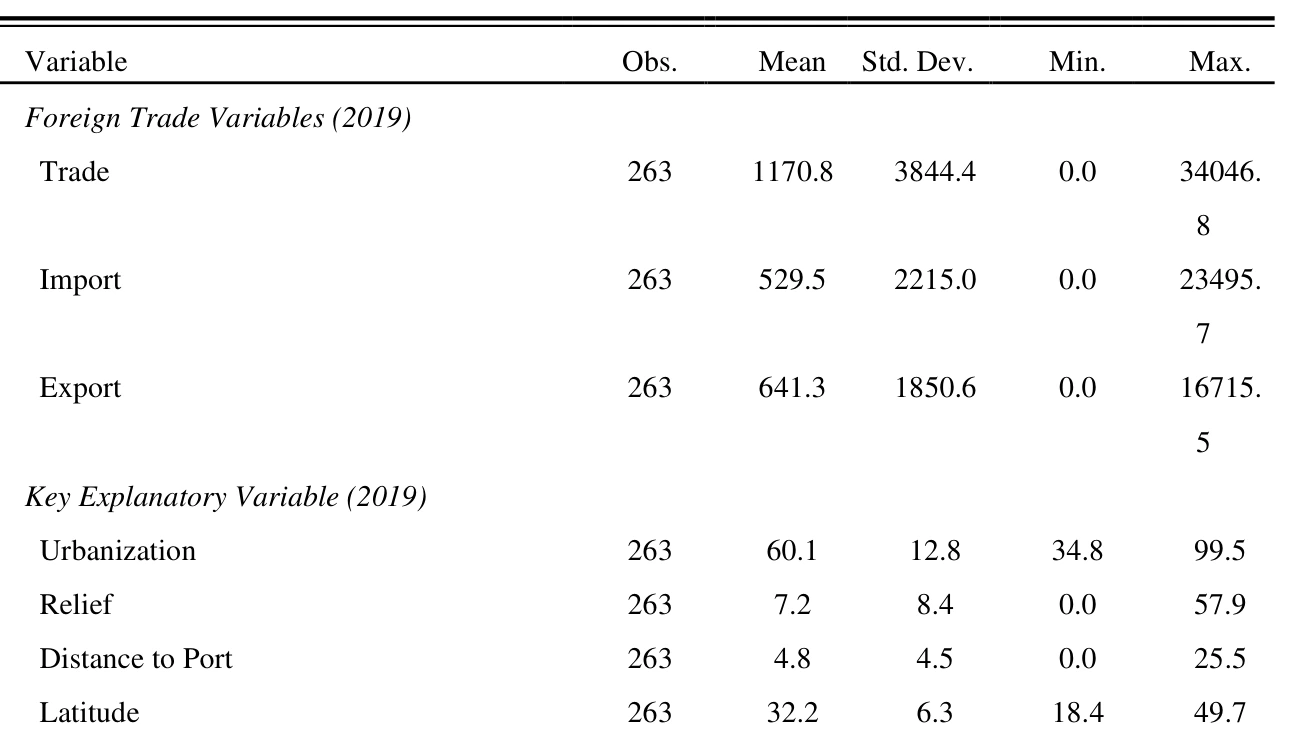

Finally, we eliminated the severely missing observations. This may improve the accuracy of our estimates. We obtained a sample of 263 prefecture-level cities. In addition, in order to reduce the skewness of variables, natural logarithms are also used for key explanatory variable and control variables.
3.3. Baseline Result
The baseline results are reported in Table 2. Before we fully control the covariates in column (2), we first adopt the urbanization rate of the permanent resident population of a city as our key independent variable [column (1)]. In columns (3) and (4), we examine the robustness of our dependent variable to the level of urbanization by using the total import and export volume of the same city as an alternative plan respectively. The baseline results show that an increase of 1% in the urbanization rate of permanent residents will increase the total foreign trade by 1.85%. When assessed at a mean of 1170.8, this translates into a marginal effect of ¥2.166 billion. Similarly significant results were found for the other two dependent variables. The marginal effects of total imports and total exports were 16.99 and 9.80 respectively. No matter how to change the measurement of trade amount, the result is robust after the covariates are controlled.
Foreign Trade in 2019 (logged) Imports (logged) Exports (logged)
(1) (2) (3) (4)

3.4. Causal Identification: Earthquakes as the Instrumental Variable
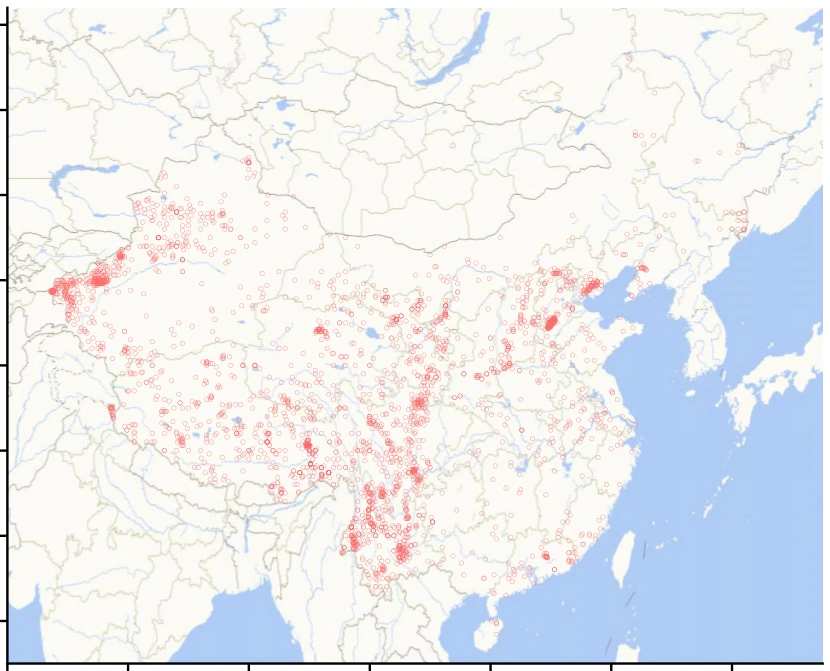
Although we have controlled for many possible confounding variables, there are still potential missing variables: variables that are related to both the level of urbanization and foreign trade in 2019. For example, areas with higher rates of urbanization may have something to do with some unobserved endowment, natural or human, that makes their people and enterprises more willing to engage in foreign trade. There may also be measurement errors, as the rate of permanent population urbanization may not be a perfect reflection of local urban expansion. In order to solve these problems, we use an instrumental variable. Given that geological stability can have an significant impact on the size of a city (Islam et al., 2015), we turn to the shaping effect of earthquakes on cities for clues. From the Qishan Earthquake2 of the Zhou Dynasty in 780 BC to 1970 AD, 1708 earthquakes were recorded in 211 prefecture-level cities. This means that the occurrence of earthquakes varies greatly from city to city due to different geological structures. Most of the earthquakes occurred in western China, especially in Sichuan, Yunnan and Guangxi provinces (see Figure 3).
2 780 BC (the 2nd year of King You of Zhou), an earthquake happened in Qishan, Shaanxi province (34.5° N, 107.8° E). It was the earliest clearly recorded earthquake in Chinese history and was estimated to have a magnitude of at least VII. According to the record of Discourses of the States, the earthquake made the River Jing, Wei and Luo dried up, Mountain Qi also collapsed.
Latitude
Small settlements tend to form in earthquake-prone areas and thus cannot form the basis for developing large cities. In addition to the rugged and complex terrain in the earthquake-prone area, the limited scale of settlements is largely due to the destructive effect of natural disasters on the natural economy. Fragile economic structures are vulnerable to natural disasters and fail to generate the flow of material that cities need. Moreover, because of technical limitations, earthquake-resistant buildings often require public funding, which the smallest unit of society, the household, clearly cannot afford.
In addition, earthquakes can affect building habits in the region. Buildings in earthquake-prone areas tend to be shorter and more solid. Although the consequences of this building habit were not obvious in ancient societies, cultures with low building heights are more likely to have survived over time. Taller buildings tend to be built in more geologically stable areas, while earthquake prone areas tend to be dominated by low-rise buildings. The number of people that can be accommodated in buildings of different heights shall lead to higher differences in urbanization rates among cities.
In this context, we measure endogenous urbanization rates using a number of earthquakes occur in prefecture-level cities from 780 BC to 1970 AD, matching historical or inferred earthquake epicenters with modern administrative divisions, and calculating the number of earthquakes occur within the administrative districts of each prefecture-level city.
Table 3 provides the first stage results of our 2SLS analysis. In column (1), we do find that there is a significant negative correlation between the number of earthquakes and the level of urbanization. Although the significance of urbanization decreased after the inclusion of control variables, it is still within an acceptable range [Column (2)].
In addition, by the 1980s and 1990s, China's foreign trade, mainly influenced by the establishment of special economic zones such as Shenzhen, Zhuhai, Shantou, Xiamen and Hainan, began to rise, leading to a rapid increase in the region's foreign trade amount, and the region's trade structure was initially constructed and finalized during this period. Before this, due to the implementation of China's strict planned economy system, state-owned foreign trade companies completely monopolized the country's foreign trade, import and export does not depend on the economic situation of the region, but determined by the national plan. Thus, the number of earthquakes before 1970 should also be orthogonal to regional trade. To demonstrate this, we directly regress the region's foreign trade volume directly to our instrumental variable. The results show that although the number of earthquakes has a significant impact on the outcome variables [column (3)], once we control the urbanization rate [column (4)], the significant relationship decreases significantly. The above analysis shows that our instrumental variables meet the requirements of correlation and exogeneity.

We can now report the estimated results of the tool variables in Table 4. Using the number of earthquakes between 780 BC and 1970 AD as an instrumental variable, we find that urbanization rates positively explain total foreign trade in 2019 [columns (1) and (2)]. Compared with the OLS estimate value (1.85), the urbanization coefficient using instrumental variables has more than doubled [3.98 in Column (2)], indicating that there may be measurement errors and endogenous urbanization measurement may underestimate its impact on foreign trade.
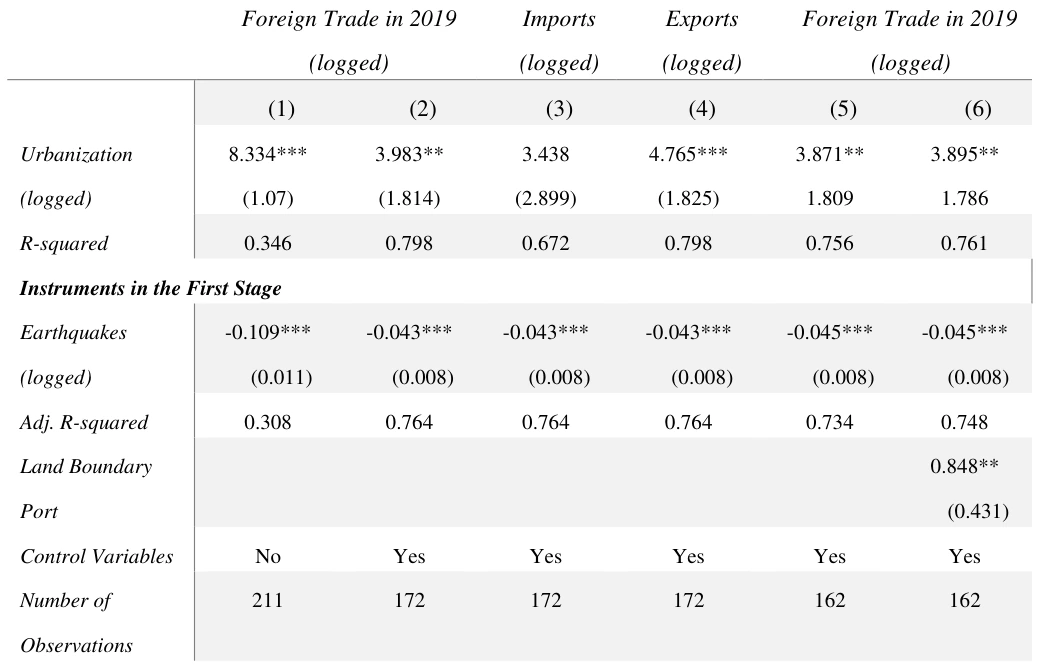
Table 4 Effect of Urbanization on Foreign Trade: 2SLS Estimation. Notes: *** p<0.01, ** p<0.05, * p<0.1. All control variables are the same as in Column (2) of Table 2 except Land
Boundary Port. Constant added but not reported.
3.5. Exclusion Analysis: Land Port Effect
One concern of our instrumental variables is that, in addition to the correlation with urbanization, do land ports happen to exist in areas with high earthquake incidence, thus affecting the total amount of foreign trade of cities and municipalities? In fact, as of 2019, China had 70 land ports in 35 prefecture-level cities. To confirm that the impact of our instrumental variable on trade really comes from urbanization rather than land port effect, we constructed a dummy variable to indicate whether a city has one or more land ports. Adding it to the regression hardly changes the 2SLS results; urbanization variable remain significant [column (6) in Table 4].
4. Cultural Channel between Urbanization and Foreign Trade
A large number of literatures have proved that urbanization can indeed cause economic growth, and economic growth can bring prosperity to foreign trade. The economic channels between urbanization and foreign trade have been fully proved. Therefore, we now turn to examine whether the impact of urbanization on trade can occur through the channels of commercial culture. To clarify this question, we first examine whether urbanization really breeds a culture that makes people value and more willing to engage in commerce. Next, we examine whether a stronger commercial culture can lead to higher trade volumes. Finally, we observe the communication effect of commercial culture in different regions.
We used the ratio of the number of commercial bank outlets in each region in 2019 to the area of prefecture-level city administrative areas, that is, the density of regional commercial bank outlets, as a proxy for the prosperity of commercial culture. The reasonableness of doing so lies in that areas with stronger commercial culture tend to have more intensive commercial activities, and the functions of credit intermediary, payment intermediary and credit creation owned by commercial banks create conditions for greater capital demand and faster currency circulation. In short, areas with a higher density of commercial bank outlets are considered to have a stronger commercial culture.
4.1. Verifying the Cultural Effect of Urbanization
In order to test whether urbanization can foster a stronger commercial culture, we directly regress the commercial culture variable. The results are reported in Table 5.
Columns (1) and (2) respectively report the OLS estimation result of urbanization on commercial culture and the 2SLS estimation value using the number of earthquakes as a tool variable. The results show that the level of urbanization has a significant positive impact on the prosperity of regional commercial culture. To be specific, with the improvement of urbanization level, more people whose main occupation is farming will choose to enter industry and commerce because of higher income conditions or employee benefits. To test this path, we added the per capita GDP of each city in 2019 as the control variable in OLS regression and instrumental variable regression respectively [Column (3) and (4)]. The results show that after controlling per capita GDP as a proxy of income, the significance of urbanization variable decreases significantly. This shows that resident income is a main way that urbanization breeds commercial culture.

4.2. Commercial Culture and Foreign Trade
Historically, the regions with the strongest commercial culture have developed foreign trade in daily necessities or cash crops since the Song Dynasty. At the end of the Qing Dynasty, after the opening of commercial ports across China, the promotion of commercial culture to trade was further enhanced. According to the records, "Since the establishment of foreign ship customs, business flourished. There are only four or five companies in this industry, and the daily profit is even more than three or four hundred taels of silver." Since the 1980s, China had gradually loosened its strict restrictions on trade and allowed individuals and non-public enterprises to participate in foreign trade activities. Commercial culture has been cultivated again, while foreign trade has also developed rapidly.
The regression results of commercial culture on trade are reported in Table 6. Before we control for covariates in column (2) that may influence the level of trade from other channels, we first regress the prosperity of commercial culture directly to total amount of foreign trade [column (1)]. The results were positive and robust. In order to further verify the channel effect of commercial culture, we directly use urbanization rate variable to regress the total trade volume of the region, and add commercial culture as a control variable on this basis. Columns (3) and (4) respectively reported the OLS regression results before and after the addition of commercial culture. Columns (5) and (6) reported the 2SLS estimation results using the number of earthquakes as a instrument variable. We find that after the addition of control variables, the significance of urbanization rate on total trade decreases significantly, while commercial culture becomes significant as a channel variable. This strengthened our confidence in business culture as a channel of influence.

In order to compare the economic channels through which urbanization affects foreign trade, we added the logarithm of each region's GDP in 2019 as a proxy for the economic scale of the cities. Column (7) of Table 6 shows that the commercial culture variable is no longer significant after the controlling for economic size. This shows that commercial culture is the path through which urbanization affects the level of trade, but compared with economic channels, it does not show a stronger transmission effect.
4.3. Regional Differences of Commercial Culture
Considering the huge economic and cultural differences between different geographical regions in China, the extent to which cultural channels can play a role in different regions is also different. To assess the extent of this divergence, we estimate the degree to which commercial culture responds to urbanization levels in each of China's six administrative regions. Columns (1) to (6) of Table 7 report the estimated results for North, Northeast, East, South-central, Southwest and Northwest China respectively. Among them, in Eastern and South-central China, the level of urbanization has a positive and significant effect on the prosperity of commercial culture, while in other regions, the expected and sufficient significance is not observed. This indicates that commercial culture in east and central China may have a high degree of dependence on urbanization, but not in other regions.

Accessible table text
| — | — | — | Commercial Culture in Different Regions | — | — | — | — | — |
|---|---|---|---|---|---|---|---|---|
| — | — | — | (1) | (2) | (3) | (4) | (5) | (6) |
| Urbanization (logged) | — | — | 0.039 -0.996 1.984** 3.351*** -1.117 2.679 (0.939) (0.89) (0.782) (0.805) (2.08) (2.456) | — | — | — | — | — |
| Control Variables | — | — | Yes | Yes | Yes | Yes | Yes | Yes |
| — | Number of | — | 25 15 70 66 22 21 | — | — | — | — | — |
| — | Observations | — | — | — | — | — | — | — |
| Adj. R-squared | Adj. R-squared | — | 0.9285 | 0.7577 | 0.6901 | 0.7894 | 0.7647 | 0.5937 |
5. The Function Channel of Commercial Culture
Now that we have made it clear that the causal relationship between foreign trade and urbanization can be generated through the channel of commercial culture, we turn to investigate the action path of this transmission mechanism.
One of the mechanisms by which culture works is that it can encourage a kind of atmosphere in which individuals can engage in specific activities. In regions with strong commercial culture, commerce is often a collective behavior. Although it is not uncommon to conduct commercial activities with individuals as units, the role of culture can be better inherited in families or clans (Elman, 2013; Ho, 1962). The knowledge accumulated by the clan and the large social network make it possible to innovate in commerce. We used the overall innovation index of each prefecture-level city in 2019 to represent the innovation capacity of the regions. This indicator includes (i) entry of new businesses, (ii) number of foreign investments, (iii) number of private equity investments, (iv) number of patents granted and disclosed, and (v) number of trademarks granted.
In order to verify the transmission effect of innovation capability in commercial culture and foreign trade, we estimate the response degree of commercial culture to total amount of foreign trade before and after controlling innovation variables. Table 8 reports the results of this set of regressions. In column (1), we include only commercial culture variable, and once we control for the proxy variable of innovation (or their first principal component), the significant and positive effects of commercial culture on trade disappear [column (2)], while innovation capability becomes significant as a channel variable. In order to further exclude other missing variables that may have an impact on trade, we reported in column (3) and (4) the estimated values after the inclusion of the Preferential Trade Arrangement Dummy Variable, Straight-line Distance to the nearest Port, and GDP per capita. The conclusion is consistent with the direct regression of innovation capability and commercial culture after covariates are added. In addition, we also observe the impact of innovation on foreign trade from a more micro dimension: per capita innovation index [Column (5)], and the results show that the significance of business culture variable does not decline significantly after the inclusion of per capita innovation index. This shows that the way of individual innovation is not the main reason for the formation of this influencing mechanism. This conclusion is not surprising, since a culture that values commerce is more likely to have a lasting and stable impact on trade than individual choices.


6. Conclusion
Our research shows that cultural channels generated through innovation are an important way for urbanization to influence foreign trade. Specifically, after controlling for many covariates, higher urbanization rate is positively correlated with higher total amount of foreign trade.
Using the number of earthquakes recorded between 780 BC and 1970 AD as an instrumental variable, we further find that the correlation between urbanization and foreign trade is a causal relationship, which overcomes potential endogenous problems in the measurement and thus avoids the risk of underestimating the coefficient of the correlation. In addition, we also show that the causal relationship is spread through the channel of commercial culture, and the cultural transmission is obviously different in different regions of China. Last but not least, we document the ways in which commercial culture acts as a conduit. Specifically, urbanization builds a commercial culture by regulating residents' income, and commercial culture promotes the growth of foreign trade by creating a social atmosphere that supports and encourages innovation.