 Journal of Global Trade, Ethics and Law
Introduction
Recent global events and conflicts have shifted the international world order away from the unipolarity dominated by the United States ever since the Cold War era into new directions that are catching many by surprise (Presidential Executive Office of Russia 2022). To start, the COVID-19 pandemic, arguably the single most significant event in the past decade, has inflicted catastrophic humanitarian crisis and continues to cause complications to lives and livelihoods. Next, uprooting of foreign infringements by the domestic forces, along with proxy armed conflicts on Ukrainian soil between longstanding polarizing powers, namely the United States, Europe and Russia, coupled with the Israeli–Palestinian conflict, have escalated global tension to the point where there are now speculations regarding the likelihood of nuclear warfare (UN News 2022). In light of the evolving multipolar world order and increasing regional security threats, this paper seeks to address the question: What are the key strategic incentives and potential benefits for India, South Korea, and Vietnam (IN-KR-VN) to enhance trilateral defense cooperation, and how can this cooperation contribute to regional stability?
We argue that trilateral cooperation can offer IN-KR-VN a means to collectively enhance their defense capabilities while preserving autonomy in an increasingly polarized global order. Specifically, this cooperation can firstly serve as a deterrent against regional threats, secondly, protect critical trade routes in the Indo-Pacific region, ensuring economic independence, and finally, foster joint defense and economic initiatives that leverage each country’s strengths.
In what follows, we first examine the history toward independence of IN-KR-VN individually and highlight the detriments inflicted upon each country by colonialism, thereby making a collective case for defense cooperation with an aim to mitigate the risk of foreign intrusion in the present time. Next, we identify the border security concern mutual to IN-KR-VN, followed by an assessment of their reliance on seaborne trade over the Indo-Pacific water that necessitates freedom of navigation and aviation unimpeded by any single nation. Lastly, we assess the mutual economic interests based on their heterogeneous industrial and institutional organizations. In particular, we analyze how India, South Korea and Vietnam (henceforth IN-KR-VN) have continued to resiliently show evidence for rapid post-pandemic recovery in facing major disruption in the global supply chain, exacerbated by newly constructed stringent regulations that have resulting in supply and logistical disruption due to stringent preventative regulations against the spread of COVID-19, coupled with halt of goods and services production in warring states continue to compound rising prices and faltering growth (IMF 2022). and at the same time being the most well placed for future growth are IN-KR-VN. Ultimately, laying the foundation for a potential regional trade agreement that would altogether incentivizing synergistic transnational cooperation. To this end, we develop a repeated game framework that highlights the trade-off between short-term economic gains from protectionism and long-term benefits from sustained cooperation. We show that the key to fostering deep and lasting economic integration between India, South Korea, and Vietnam lies in ensuring that future benefits from cooperation are sufficiently large and well-recognized by all parties. Institutional mechanisms that reduce the temptation to defect and promote long-term economic stability are essential to achieving this goal.
1. Shared Histories of Anti-colonialism
To elucidate the urgency for the strengthening of defense cooperation between IN-KR-VN in the present time, it will be helpful to first survey the history of each country in dealing with the foreign powers, whose colonial rule obstructed independence and hindered development. Tracing back to the modern histories of IN-KR-VN, all three experienced marked overlaps: the ravaging of human and natural resources by colonial powers, and shortly after, exploitation as battlegrounds for proxy wars between Communist and Capitalist powers throughout the twentieth century.
1.1. Indian History of Anti-colonialism
Starting with India, a country historically composed of mosaics of empires and kingdoms spanning across multiple millennia. Historical implications on the formation of what India is today are perhaps best found during the colonial rule by European empires (Wouters 2023). The presence of European settlements in India began as early as the 1400s with the Portuguese Empire (Disney 1977). The lucrative, yet innocuous Spice Trade established by the Portuguese evolved to be a full-scale ransack of India’s natural resources upon the arrival of the, Dutch French, and British Empires in the 1600s (Wilson 2023).
At the beginning of the Seven Years War (1756-1763), the British Empire and its East India Company (EIC) took over the French control of the Indian state of Bengal. By 1800s, the British Empire solidified its domination as the sole Imperial power in India, exemplar through its employment of over a quarter million Indian soldiers to form the largest militia in the country. In 1857, the British Empire seized total control over India when it exiled the last Mughal emperor (Fisher 1985). In the name of profit, the EIC increased tax and tolls, reallocated the packing of finished products from India to Britain, as well as shifted agriculture production of daily consumables such as wheat and rice to cash crops like cotton and tea, making EIC the wealthiest private company of that time period (Bowen, 2005). The British Empire continued to siphon India’s resources for another 89 years until the EIC dissolved in 1858. It was not until after World War II did India take advantage of a war-battered Britain to expel colonial rule, proclaiming independence on August 15, 1947.
Despite having declared independence, India continued to face interference from foreign powers fighting for global hegemony throughout the Cold War period. One of the most blatant of such interferences occurred during the 1971 Indo-Pakistani conflict, during which India was facing a great influx of refugees from East Pakistan (present day Bangladesh), the majority of whom were political dissidents hunted by soldiers from
West Pakistan (present day Pakistan). As India was lending support to East Pakistan’s wish to secede from its Western counterpart, the US, Britain, and China seek to undermine India’s influence by funding and inciting West Pakistan to prevent its eastern counterpart from peacefully attain autonomy as an independent nation (Sidky 1976). In a UN Security Council meeting, the Nixon administration put forth a resolution calling for the withdrawal of Indian troops from East Pakistan, disregarding India’s effort to curb the impending genocide of Eastern Pakistani refugees (Biswas 2023). Nonetheless, India’s stern stance on democratic resolve ousted West Pakistani’s grip on East Pakistan, allowing for the formation of Bangladesh as a nation.
1.2. Korean History of Anti-colonialism
Moving to the Korea Peninsula (prior to the partition into North and South Korea), with its geographic location sandwiched between two longstanding superpowers–China and Japan–the peninsula had incurred countless battles for control over its land. While foreign invasions during the Feudal Age are now chiefly relegated to historical textbooks, the atrocities committed during the Japanese colonial rule throughout the first half of the twentieth century left lasting scars on the Peninsula and remain a topic of lively discussion in today’s popular media (M. S.-H. Kim 2022).
The colonization campaign started with Japan’s Meiji Restoration campaign (Takii 2023). In 1895, Japanese agents assassinated Queen Min, an outspoken figure against Japanese transgression (Kim 2008). In 1907, Japan dissolved the Korean army, setting the stage for its Oriental Development Company to pirate Korean resources in order to meet the demand of large-scale warfare that Japan was waging throughout Asia. One of the main shortages Japan faced was food production, which prompted the Oriental Development Company to buy Korean land at cheap price, only to rent the land back to Korean farmers at extravagant rates that crippled the Korean Economy (Smitka, 1998).
As Japan morphed into fascism at the onset of the Second World War (WWII), its appetite for resources became ever more insatiable, so did the ravaging of Korean resources. For instance, Japan altered Korea’s industry from an agriculture centric industry to one focused towards heavy chemical production for weaponry supply (D. Kim & Park, 2008). Most notably, the coercion of approximately three thousand Korean ‘Comfort Women’ in concentrated camps to work as sex slaves for Japanese soldiers continues to be a point of friction in today’s relationship between Korea and Japan (Yoshimi 2002). At the end of WWII, Korea overthrew a defeated Japan to gain independence on August 15, 1945.
The joy of independence was short-lived as the Korean peninsula became an epicenter for battle over world dominance between Capitalist and Communist powers at the onset of the Cold War. With the Soviet backed North pitted against the US backed South, the Peninsula was broken up at the 38th parallel, a line drawn solely based on the decisions made by Soviet and US leaders (Matray 1981). In 1948, the two Koreas set up their own independent governments with the South leading the way on August 15 and the North following suit on September 9. In June 1950, Kim Il-Sung, North Korea’s first Supreme
Leader, rolled his army past the 38th parallel to begin a three years long civil conflict after having received Stalin’s greenlight. On July 27, 1953, both sides signed an armistice agreement, however, only to remain partitioned to date (Vaddi 2023).
1.3. Vietnamese History of Anti-colonialism
Last but not least, we turn to the history of Vietnam. After a millennium of being under feudal rule by multiple Chinese Dynasties (111 BC-939 AD), Vietnam continued to be subjected to colonial rule by the French Imperialist from mid-nineteenth to mid-twentieth century (Kang et al. 2019). To support its global colonial expansion, the French empire exploited the native population to extract Vietnam’s abundant natural resources such as rare minerals, rubber, and in particular, coal to fuel the French steam-engine naval fleets (Murray 1980).
During WWII, French control over Vietnam was briefly taken over by the Japanese Imperialist at the height of fascism, though it did not take long before France, with support from Washington, reclaimed colonial rule after the defeat of Axis powers at the end of WWII (Torikata 2007). French colonization this time round came with bombing attacks carried out by the US Air Force with the intention to paralyze North Vietnam, a stronghold for Vietnamese nationalist insurgencies. The collapse of North Vietnam came close in 1945 when poor rainfall, coupled with nonstop bombings resulted in failed harvests that led to widespread food shortages (Bose 1990). As a consequence, an estimate of two million lives were lost due to starvation in what is referred to today as The Great Famine of 1945.
When the nationalist Viet Minh force led by Ho Chi Minh expelled the French Imperialists inn 1954, Vietnam was bound for full independence upon the ratification of the Geneva Accord which called for a full removal of colonial presence from Southeast Asia, thereby setting the stage for the Vietnamese people to democratically elect their own government (Watt 1967).
Nevertheless, the path to independence got delayed for another twenty years when the United States unilaterally did away with the Geneva Agreement in fear of a Communist takeover in Southeast Asia despite repeated proposals for partnership from North Vietnam in the preceding years (Asselin 2007). For another twenty years, what happened to India and Korea too applied to Vietnam, with the country turning into a proxy battleground for Capitalism verses Communism (Herring 2004). The drawn war ended on April 30, 1975, when the nationalist North Vietnam force defeated the puppet government propped up by the US in South Vietnam. While arm support from the Soviet Union and China played a significant role in enabling North Vietnam to defeat the technologically superior US military, victory would not have been possible if the Vietnamese population across the country were not rallied behind the fight for independence and unification, wherein nine- hundred thousand of whom sacrificed themselves for the cause.
Although it has been decades since the war ended, its ramifications are still palpable in the present days. In today’s central region of Vietnam, deformed babies are still being born when the parents are exposed to the residual carcinogenic Agent Orange, a herbicide sprayed over Vietnamese jungles by the US Air Force in hope to deter guerrilla warfare (Stellman & Stellman 2018).
In sum, the paths toward independence of IN-KR-VN follow the plot applicable to many others engulfed in battles waged between polarizing world powers. Regardless of whoever emerge as the victors, the consequences for being caught in the middle invariably entail the inevitable setback of decades of infrastructural and cultural developments, and with cases like that of the Korean peninsula, a seemingly unretractable civil rift beyond any immediate reconciliatory measure. Out of three countries, only Vietnam emerged in one piece from the Cold War period despite being the smallest geographically, which goes to show how being a bigger country with a larger population does not warrant immunity from foreign threats that are yet bigger and stronger.
1.4. The Russo-Ukrainian Conflict: A Reminder
The danger of dwelling in the center between the two opposing polarizing forces is as true today as it was during the Cold War; such is exemplified by the ruined state of a Western-backed Ukraine after months of fending off shelling from Moscow (Achcar 2023). Regardless of the outcome to the Russo-Ukrainian conflict, the months-long armed conflict has proven enough to set back decades worth of development; and it is the Ukrainian people who have pay the heaviest price in recovering from the destruction of their homeland. The present Russo-Ukrainian conflict are amongst countless other lessons that demonstrate how the native population only stands to lose in a conflict ginned up by external forces (Cafruny et al. 2023).
In accepting that tending against these polarizing forces is simply an unfeasible task for IN-KR-VN individually, we look to a trilateral defense partnership as an answer to the dilemma of what IN-KR-VN can do to ensure their national securities from being compromised by foreign encroachment moving forward. A strengthened trilateral IN-KR-VN partnership has the potential to afford its participants greater autonomy from having to rely on defense and commercial support of polarizing powers, thereby lessening the risk of being caught in conflicts waged by these very forces. The case for an IN-KR-VN trilateral partnership is perhaps ever more apparent in the present time given the recent uptick in both borders and maritime territorial disputes, particularly in dealing with Beijing and its pursuit of a Sinocentric Asia.
2. Cooperation on Border and Maritime Security
Moving forward to the present decades, the ever-increasing presence of Beijing in the global economy is accompanied by the One Belt One Road initiative that, according to the State Council of China, “aims to promote the connectivity of Asian, European and African continents and their adjacent seas” (State Council of the People’s Republic of
China, 2014). The expansive nature of the One Belt One Road initiative undoubtedly has been a source of regional territorial contentions (Johnston, 2019).
2.1. Mutual Defense Concerns
On land, India has been in constant tension with China over the contested Himalayan regions since the 1962 Sino-India War (Karackattu 2018). Today, the pervasiveness of the One Belt One Road initiative, reflected by hot flashes of armed skirmishes between Indian and Chinese troops in Arunachal Pradesh and Ladakh, has resulted in numerous protests against the Chinese belligerence across India in 2017. Another point of contention between India and China deals with battle for control over buffer states between the two countries, most notably the autonomous region of Tibet. Beyond direct physical conflicts, China, through its considerable capital and infrastructure investment, exercises a great deal of soft power over countries that are of national security concern to India such as Nepal, Bhutan, Pakistan, and Bangladesh.
Similarly, the concern regarding buffer state is also applicable to South Korea when faces a belligerent North Korea. As is, resolutions to the Korean Peninsula conflict will most likely remain in gridlock so long as the North Korean regime continues to receive political and financial backing from China.
Lastly, border dispute with China remains a constant concern for the Vietnamese government given the disparaging disproportion regarding the two countries’ geographical and population sizes, as well as economic and military prowess. Such concern manifested in 2018, when the Vietnamese population protested against two pieces of legislation that would open doors to Chinese encroachment. Regrettably, the disputes on land between China and IN-KR-VN do spill over to the water.
On the water, India has been the country least involved in direct conflicts with China, although that is not to say that there has not been any clash of interest. China’s widespread naval base and port developments throughout Sri Lanka, Pakistan, and Bangladesh have resulted in tension between the two countries over trading routes on the Indian Ocean (Malik 2018). Moving eastward to the Pacific Ocean, South Korea and China have been in deadlock over jurisdiction claims to fishing water on the Yellow Sea that has resulted in a number of deadly encounters. Similar strife is applicable to Vietnam regarding contentious jurisdiction disputes with China overfishing water. Of late, China’s maritime belligerence are exemplified by its exploration for oil off of other countries’ coasts, and arming artificially built islets with fighter jets and anti-ship systems that look to hinder freedom of navigation and overflight (Alessio & Renfro 2022).
Although having identified the One Belt One Road and as the common denominator threatening to the territorial sovereignties of IN-KR-VN, it is impractical to propose a military partnership that will adopt a combative stance against China for two reasons. First, China’s recent military posturing demonstrates to the world a force capable of overwhelming any adversary and is best left unprovoked for the adversary’s sake of selfpreservation. China’s military might is reflected in its defense budget, which has consistently been the world’s second largest, only below that of the United States. Though it should not be a surprise that China’s defense spending has been surpassing that of IN-KR-VN individually in the past decade, it is important to note that China’s defense spending has been surpassing that of IN-KR-VN collectively as well, seen in Figure 1. The stark difference in military spending alone ought to be enough of a deterrent against any display of aggression from IN-KR-VN toward Beijing. Second, combative retaliatory measures run the risk of jeopardizing economic ties with the world’s second largest market. Simply put, the impracticality of armed conflict with China calls for nonconfrontational alternatives in tackling these defense concerns.

In assessing the viability of defense cooperation between IN-KR-VN, we first assess the diplomatic convergence in their foreign policies, as well as the ensuing defense equipment transfers and joint defense exercises that stand to address their national security concerns.
2.2. Convergence in Foreign Policies
In terms of diplomatic convergence, the spike in mutual demand for unobstructed maritime logistics over the Indo-Pacific water has rapidly elevated cooperation between the three countries. In looking for an anchor point to assess such convergence, India’s 2014 Act East Policy, initiated by Prime Minister Narendra Modi to signify India’s willingness toward forging strategic relationship with countries in the Pacific region, serves as a central point for the high volume of diplomatic exchanges witnessed in the past decades (Mazumdar 2021).
India’s initiative was quickly reciprocated by South Korea’s returning interest for cooperation; first, with the promotion of India-South Korea relation to Special Strategic Partnership in 2015m; and second, with the South Korean former President Moon Jae-In naming India as a key partner in his 2017 New Southern Policy, designed for diversification of South Korean defense and economic efforts into South Asia. Moon’s policy also names Vietnam, along with others in the Association of Southeast Asian Nations (ASEAN), as critical partners to South Korea’s diversification effort.
In reciprocating the cooperative spirit of Modi’s and Moon’s policies, the India-Vietnam and South Korea-Vietnam Strategic Partnerships were promoted to Comprehensive Strategic Partnerships in 2016 and 2022, respectively (Ji-hye 2022; Solanki 2021). Convergence in foreign policies between IN-KR-VN took a step further when Vietnam held the ASEAN chairmanship position in 2020. In virtually every succeeding diplomatic exchange between the three countries. the rhetoric that overwhelmingly reverberates is one that promotes rules-based maritime participation, in particular, adherence to the 1982 United Nations Convention on the Law of the Sea, as the enforcing mechanism in ensuring freedom of navigation and overflight over the Indo-Pacific water.
2.3. Defense Equipment Transfer & Joint Defense Exercises
Convergence in defense interest between IN-KR-VN evolves beyond ceremonious diplomacy. Its substance manifested in the robust defense equipment transfers between the three countries witnessed in the past decade. In 2017, the South Korean defense conglomerate Hanwha-Techwin agreed to assist its Indian counterpart, Larsen & Toubro, with the manufacturing of 100 self-propelled K9 Vajra-T howitzer over a 720 million USD arms deal. The Indian K9 Vajra-T, modelled after the Korean K9 Thunder, is capable of delivering a 47 kg load over a range of 50 km, and serves as an effective deterrent. Point in case, a K9 Vajra-T regiment was deployed to the Line of Actual Control that lies between India and China in 2019 as tension between the two countries were climbing (Negi 2022).
In another example of defense equipment transfer, Vietnam Navy purchased 12 highspeed patrol boats from India thanks to the 100 million USD line of credit that came out of the 2020 India-Vietnam Peace, Prosperity and People Summit. In it also included plans for collaboration on petrochemical and nuclear energy (Ministry of External Affairs of India 2020).
Another centerpiece resulting from the convergence in defense concerns are joint exercises between the three countries’ militaries. Between India and South Korea, the 2016 Sahyog-Hyeoblyeog anti-piracy, search and rescue exercise hosted by the Indian Coast Guard was joined by Korea Coast Guard Ship 3009, a 3,000-tonne Taepyungyangclass vessel.
Between India and Vietnam, and India held their first India-Vietnam Bilateral Military Exercise in Jabalpur, India, which was quickly followed by the second joint exercise that took place the next year in Hanoi, Vietnam. Border and maritime security hotspots undoubtedly constitute a pressing concern that warrants transnational partnerships, particularly when such partnerships carry minimal political risk, and look to mutually benefit participants who are all Strategic Partners to one another. Unquestionably, IN-KR-VN share vested interest in ensuring the emerging order over the Indo-Pacific region to be rules-based, and clear from any undue influence of any single nation.
Important to note, the purpose of the proposed strengthening of defense collaboration between IN-KR-VN is not to pose a threat to the mighty power of the Chinese People's Liberation Army. But perhaps more appropriately, military collaboration between IN-KR-VN could act as a three-pronged deterrent that communicates substantial weight, enough to distract and frustrate any potential major armed outbreak. Moreover, not only could the strengthening of trilateral partnership between IN-KR-VN be mutually beneficial to their security concerns, but such partnership could also be a viable strategy for joint economic growth.
3. Multilateral Regional Trade Agreement
In the past half-decade, the world has witnessed the undoing of globalization efforts that followed ever since the Cold War era. While economists and policymakers have largely endorsed globalization and have gone as far as stating it as the main driving force behind the sensational growth of the world economy in the late 1900s and early 2000s (Stiglitz 2017), the geopolitical circumstances coupled with the outbreak of COVID-19 caused economists and policymakers to reassess this stance. The introduction of the Trump administration in United States, followed by wave of populist administration takeovers in Europe, the frontiers of global order were reinstated, and country borders and alliances redrawn in both a figurative and literal sense. With the two economic powerhouses–the US and China–bifurcating countries under their umbrella of allegiance, and the Russo-Ukrainian war causing worldwide economic unrest, we discuss how IN-KR-VN can achieve stability both domestically and regionally by broadening economic partnership through a Regional Trade Agreement (RTA).
Globalization has taken a turn, and countries are scrambling to adapt to the new global order while navigating through the untimely supply chain disruptions and fears of stagflation. While globalization is no longer the panacea to all the growth problems, regional integration remains a crucial component in promoting trade and economic stability. Trade between countries in close proximity is of vast importance in order to combat the global supply chain disruptions (Frankel & Romer 1999). Modern trade agreements magnify the importance of international policy coordination while protecting mutual interests (Maggi & Ossa 2021). Instead of countries opening to border for free trade to all countries in the globe, closer regional trade interactions seem like the more attractive and effective choice of policy. Such a shift in paradigm has put RTAs as vital tools for policy coordination between countries with aligning interests. Figure 2 shows the cumulative number of RTAs reported to the World Trade Organization. We see sharp increases in the number of cumulative RTAs after 2019. These numbers show that countries are adapting to the shifting paradigm in global trade by forming regional allegiances to secure and solidify reliable trading partners with mutual interests. At the same time, it underscores the fact that countries are not completing forgoing active trading in the era of protectionism. The Indo-Pacific Economic Framework (IPEF) launched in May 2022, consisting of the US, Australia, Brunei, India, Indonesia, Japan, Republic of Korea, Malaysia, New Zealand, Philippines, Singapore, Thailand and Vietnam, is an example of a recent effort to form a regional ‘ring’ of trading partners. These efforts are becoming more and more tailored to address specific economic problems and interests that countries in similar geographic regions face, unlike the past when most trading agreements looked to broaden liberalization in general.

Despite the wariness towards trade liberalization due to the current geopolitical uncertainty and push towards self-sufficiency, a complete forgoing of regional integration would be detrimental to the world economy. Re-enforcing tariffs and putting up trade barricades in order to protect the domestic market would bring about adverse effects from deteriorating growth, to widening inequality. A study by Kutlina-Dimitrova et al. (2017) shows that a complete withdrawal of all global tariff commitments from bilateral and regional trade agreements would result in an annual global real income loss of 0.3 percent which is equivalent to 211 billion US Dollars after three years (Kutlina-Dimitrova 2017). Furthermore, their model suggests that these losses are most likely to hit regions like East Asia, Pacific and Latin America the hardest. Individual consumers are likely to be most adversely affected as costs of the increased tariffs would inevitably be passed onto the consumers in trickle-down effects through increased prices in imported goods, which would result in reduced purchasing power of consumers. Most of these purchasing power reduction effects are concentrated in low-income households, as these households spend more on traded goods as a share of their income (Fajgelbaum & Khandelwal 2016). Under no circumstances would a complete foregoing of international trading relations be anything less than disastrous for a country’s economy in the modern world. It would also mean the end of a global effort to eradicate poverty set out by the United Nations in the form of the Millennial Development Goals. Similarly, IN-KR-VN should not recede back to the closed border policy but form closer knits of regional trading partnership. Furthermore, it is a widely acknowledged fact that trade has a positive relationship with growth according to Frankel & Romer (1999). These effects extend to trade enhanced from RTAs as well. In general, regional integration is shown to increase per capita GDP growth, with Asian developing countries being the largest benefactors amongst its developing counterparts around the globe (Santos-Paulino et al. 2019). They go on to show in their analysis that these growth effects are augmented when developed countries are included in the regional networks of developing countries, and have further impacts on better distribution of income by easing prices on consumer goods due to increased competition in the domestic market. Additionally, they show that RTAs improve the development path of participating countries through non-linear effects on key development indicators. In the case of IN-KR-VN, the composition of the participating economies is ideal for growth and redistribution effects generated from an RTA with two emerging market economies that are abundant in resources and labor force and an advanced economy providing capital and technology.
Foreign Direct Investment is a key factor driving economic growth, especially for developing economies like India and Vietnam. FDI not only brings in capital but also fosters technology transfer, job creation, and productivity growth. However, the current levels of FDI flowing from South Korea into both India and Vietnam remain relatively modes, indicating significant untapped potential for strengthened economic integration. Figure 3 shows FDI inflows to Vietnam in 2021 and India in 2020, which, while providing a snapshot of the current state, highlight a notable gap in the economic relationships among these three countries. The figure illustrates the existing underinvestment from South Korea into both Vietnam and India as stands. South Korea ranks only fifth as an FDI contributor to Vietnam, significantly trailing behind Singapore. Similarly, South Korea ranks thirteenth in terms of FDI inflows into India. These numbers suggest that despite the geographic and strategic proximity of these countries, there is a lack of substantial economic cooperation, particularly in comparison to their global counterparts.
The current FDI figures reflect missed opportunities and barriers that inhibit deeper economic engagement. This supports the argument that a trilateral economic cooperation framework, potentially in the form of a RTA, would help remove these barriers and unlock greater economic benefits for all three countries. An RTA among the three countries would spell out clear alignment of economic interest with each of the countries observing clear growth in driving forces of their own economy. A recent study analyzing the factors behind growth in Asian countries has shown that exports and government expenditure play crucial roles in determining economic growth in South Korea (Wang & Choi 2019). In Vietnam, FDI was the most significant factor that affected growth and in India, increases in workforce and job openings contributed the most to economic growth. South Korea would enjoy a boost in exports through an RTA. RTAs have a significant effect on positive net FDI inflows (Medvedev 2012) and therefore, Vietnam would directly enjoy the effects of increased FDI from an IN-KR-VN RTA. Similarly, increased FDI would improve India’s growth through increased demands for labor among both foreign and domestic firms (Karlsson et al. 2009). As an example, recent investment of Korean battery maker LG Chemical in India has outlined a growth in job opportunities to the regional economy.

Disruptions in the supply chain that stemmed from the pandemic lockdown related shortages and the energy shortages due to the Russo-Ukrainian War have put significant upward pressure on global inflation rates and IN-KR-VN are no exceptions to this concern. Most economists see the current global rise in prices to stem from supply side pressures more than anything. Figure 4 shows that inflation in India peaked out at 7.0 percent in May 2022 while inflation hit 6.3 percent in South Korea in July and is yet to peak out. Though comparatively low, inflation in Vietnam also reached 3.1 percent in July, which is far above the norm that is around the 1 to 2 percent range. Skyrocketing prices put massive pressure on household budget constraints through reduced purchasing power and has disrupted the income distribution with higher income households being able to benefit from a post-pandemic bull market and rising real estate prices across the globe.

Concerns over inflation could be combated through increased trade garnered from an IN- KR-VN RTA. The most direct effects regional integration has on inflation is through changes in prices. Lower tariffs would have immediate and direct effects on prices of imported goods which would thus have immediate aftermaths to household welfare. Furthermore, Frankel & Romer (1999) stipulate the effects of trade expansion can drive down prices by increased competition from the availability of cheaper or better-quality goods due to removal of barriers to trade. There are other indirect channels through which inflation can be driven down as a consequence of regional integration. For example, the transfer of innovation, technology can improve input efficiency and foster productivity growth and hence, reduction in cost of production (Grossman & Helpman 1991). Empirical work around RTAs have also corroborated these claims. From a cross-country analysis of OECD countries between the years 1980 through 2014, Kwark & Lim (2020) show that the expansion of FTAs has had significant negative effects on CPI inflation (Kwark & Lim 2020). With the sheer variety in goods and services that are traded between the IN-KR-VN, an RTA would have a substantial effect in dampening the upward inflationary pressures.
Even from the labor market and productivity point of view, the RTA between the three countries has much to offer. Standard theory on openness and trade agreements suggest that multinational firms (especially from better developed countries) are more productive and also pay above-market wages (Martuscelli & Gasiorek 2019). This evinces that unlike the views from skeptics of market openness and offshoring, the benefits of higher productivity are spread across with nationals rather than culled exclusively by the foreign firm. Plethora of micro level empirical studies corroborate these theories. A study that looks at Indonesian manufacturing firms to uncover the effects of foreign and domestic acquisitions. The paper finds that foreign ownership or acquisition of local plant results in higher wages of the plant’s employees vis-a-vis no resulting wage growth from domestic acquisition of manufacturing plants (Sjöholm & Lipsey 2006). RTAs directly have effects on productivity and labor input efficiency. A study by Cabral and Mollik (2012) shows that NAFTA had positive effects on output per capita in Mexico and helped convergence among Mexican states (Cabral & Mollick 2012). Increased wages and labor productivity will be especially beneficial for developing economies like India and Vietnam, and an RTA would certainly boost the entry of multinational companies from South Korea.
Apart from general gains from a regional integration, shared economic interests and concerns enhances the case for an IN-KR-VN RTA. Figure 5a-c illustrate the export partner share of the three countries in 2020. India’s largest export partner is United States with a share of 18 percent with China coming second with 7 percent. Vietnam similarly are dependent on the two countries for exports but by a larger degree with 27 percent and 17 percent respectively. The case is not so different for South Korea with 26 percent of the exports concentrated in China and 15 percent towards the United States. China and US make up 25 percent of the export destination for India, 41 percent for South Korea and 44 percent for Vietnam. All three countries do have concerns especially regarding their reliance on China as large export partners due to soured relations from multiple border disputes and security related issues. A RTA setup would diversify each country’s export portfolio and decrease their reliance on US and China for exports.

4. Theoretical Framework for Cooperation
India has shown growing reluctance to participate in integration of regional economies. To address the concerns raised regarding this, in particular its decision to refrain from joining the Regional Comprehensive Economic Partnership (RCEP) we propose a theoretical framework that models economic cooperation between India, South Korea and Vietnam as a repeated game. While India has expressed hesitancy in committing to broad regional trade agreements due to concerns over market openness and domestic industry protection, this framework provides a lens to understand the conditions under which economic cooperation can still be sustained despite such reluctance. By focusing on the long-term benefits of cooperation- such as increased trade flows, foreign direct investment (FDI), and technological transfers- this model highlights how strategic, incremental engagement and strong institutional arrangements can gradually build trust and overcome short-term protectionist impulses. This approach offers a solution to the challenges posed by India’s cautious stance on regional integration, while also emphasizing the broader economic gains from cooperation with South Korea and Vietnam.
4.1. Players and Strategies.
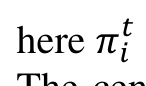
In this setup, each country i = {IN, KR, VN} represents one of the three players: India (IN), South Korea (KR), and Vietnam (VN). Each country repeatedly interacts over an infinite time horizon, where the strategic choices impact the overall trajectory of cooperation. In every period t , each country can choose one of the two strategies, Cooperate (C) or Defect(D). By Cooperate, we mean to promote economic cooperation by lowering trade barriers and facilitating FDI and engaging in institutional alignment to foster long-term economic growth. Defect means to adopt protectionist policies such as raising tariffs, imposing barriers to FDI, and giving up on regional integration. This leads to short-term economic benefits but undermines future cooperation.
4.2. Payoff Structure
The payoffs to each country depend on whether they choose to cooperate or defect. If all countries choose C, they receive long-term economic gains from trade and investment cooperation, denoted by R . These gains reflect the benefits of sustained cooperation, such as increased trade flows, shared technological advancements, and cross-border investments, all of which contribute to higher GDP growth and economic stability.
If all countries choose C, they receive a long-term payoff R in each period. A country that defects while others cooperate enjoys a short-term economic gain T in the current period by imposing tariffs or blocking investment, while the cooperating countries receive a reduced payoff R^' where T>R>R^'. However, the defecting country undermines future cooperation, resulting in lower long-term payoffs for everyone. If all countries defect, they receive a lower long-term payoff P, representing economic stagnation and lost opportunities from non-cooperation, such as reduced trade, disrupted supply chains, and decreased FDI, where P<R . Given that the game takes place over an infinite horizon, countries must consider not only the immediate payoffs but also the discounted payoffs. The discount factor δ∈(0,1) represents how much each country values future economic gains relative to presents gains. A higher δ means that a country places greater importance on future cooperation, making them more likely to prioritize long-term gains from trade and investment over short-term protectionist benefits.
4.3. Model
The total utility for each country U_i is the sum of discounted payoffs over time:

If all players cooperate in every period, the payoff to each country is:
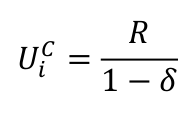
which reflects the sum of discounted future gains from continuous cooperation.
If a player defects in the current period, they receive the short-term gain T , but future cooperation breaks down, and they receive the lower payoff P from mutual defection in all subsequent periods:

For cooperation to be sustainable as a subgame perfect equilibrium, the payoff from cooperating must be greater than or equal to the payoff from defecting:
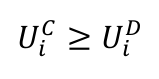
Substituting the payoffs, we get:
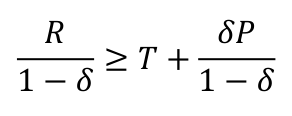
Simplifying:

This condition determines when cooperation is viable. The greater the discount factor δ , the more each country values future payoffs, making cooperation easier to sustain. Conversely, if δ is low, the temptation to defect increases, making cooperation less likely.
4.4. Implications for Economic Cooperation among IN-KR-VN
This model of repeated interaction provides several key insights into the economic cooperation between India, South Korea, and Vietnam.
The sustainability of long-term economic cooperation among IN-KR-VN depends on how much these countries value future gains. If the potential long-term benefits of cooperation, such as increased trade flows and FDI, are high enough and the countries value these future benefits sufficiently (i.e. high δ), then cooperation can be sustained. Policymakers in these countries must therefore focus on ensuring that future economic benefits from cooperation are made clear, and trust in institutional arrangements is established to maintain a high discount factor. Gains from regional trade in the long term are pronounced when there are clear comparative advantages among countries engaging in a trade agreement (Krugman 1979).
Countries might be tempted to defect by raising tariffs or imposing protectionist measures to protect short-term interests. For example, India’s reluctance to participate in broad RTA such as RCEP may stem from a desire to protect domestic industries. However, the model suggests that such defection strategies only provide short-term gains at the expense of long-term economic growth, especially in an environment where global trade is becoming more fragmented. This implies that while defection might be attractive, it leads to lower long-term payoffs for all parties involved.
Institutions that enforce cooperative agreements can play a crucial role in ensuring that the payoff from defection is sufficiently low. For instance, if IN-KR-VN can establish stronger RTA with enforcement mechanisms, they can reduce the temptation to defect and increase the sustainability of cooperation. This reinforces the need for institutional cooperation as a key element in maintaining economic integration.
4.5. Implications for Economic Cooperation among IN-KR-VN
A closer look into the exports from each country also suggests for sound basis of a trilateral trade partnership between the three countries. Table 1 shows the top exports from South Korea, India and Vietnam to each other in 2020. South Korea’s top exported products to the two countries were electrical appliances. For India, top exported products were input materials such as non- ferrous metals and iron and steel. For Vietnam, they were telecommunication goods. The traded products are very much variegated among the countries and at the same time, suggests that the three countries are responsible for different stages of production in the value chain. With the three countries at different stages of the supply chain, the three are set up for ideal trading relations, taking advantage of each other’s comparative advantage to maximize efficiency in the supply chain (Bernard et al. 2007).
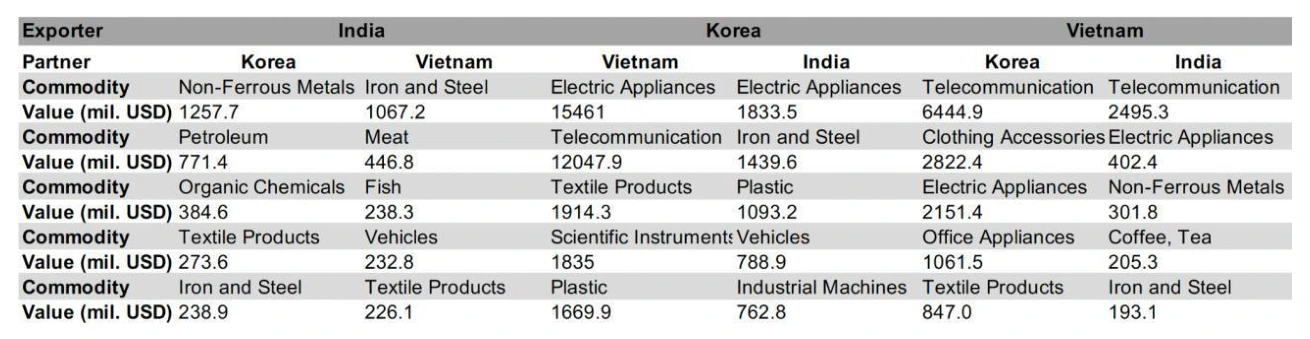
The three countries have extant bilateral trade agreements between two of the three countries (CEPA between South Korea and India, FTA between South Korea and Vietnam, ASEAN-India). However, there is no regional integration among three countries discussed in specific. With the homogeneity in economic difficulties the three countries face domestically, an RTA for starters between the three countries would be mutually beneficial to each of the corresponding economies.
5. Final Remarks
In essence, IN-KR-VN’s dependency on the Indo-Pacific water for both security and commercial interests obliges all three countries to ensure freedom of navigation and overflight over the open seas–a task demonstrated to be easier said than done given Beijing’s increasingly tight grip over the region. Acknowledging that IN-KR-VN are too reliant on China commercially, and that collectively, IN-KR-VN are not in a position to afford a direct confrontational stance against China, much less individually, the three countries are left with little options but to turn to one another; the strengthening of cooperation between participating members who carry negligible risk of interest conflict, and are within close geographical proximity promises to be a salient strategy for IN-KR-VN to curtail their reliance on any individual polarizing world power. Especially given the histories of anti-colonialism shared by IN-KR-VN, coupled with the contemporary example of the ravaged state of Ukraine due to its ongoing war with Russia, motivation for cooperation on defense that can afford the participating parties greater deterrence from encroaching activities of these polarizing world powers is ever more pertinent.
Speculating ahead into the far future, a potential endeavor worth considering is nuclear energy given the global initiative toward carbon free energy production. While Indian and South Korea already have well-established nuclear energy programs that are significant contributors to both countries’ energy demands, Vietnam is yet still in its nascent state without a nuclear reactor, and stands to profit from technological assistance by IN-KR. In return, IN-KR-VN can utilize the rich history of cross military exercises and joint commercial ventures between the three as leverage to resume the joint exploration for oil off the coast of Vietnam, which is currently being put on hold due to unwarranted influence from Beijing. Pushing the boundary of IN-KR-VN cooperation, a resolution that would serve as an unassailable deterrent, capable of frustrating any potential territorial encroachment, is one where the IN-KR-VN trifecta settles on an agreement akin to the “an attack on one is an attack on all” allegiance applicable to NATO member states.
Economically, the difficulties due to increased inflation rate and supply chain disruptions coupled with geopolitical uncertainty have left dilemmas for IN-KR-VN on what measures to take to tackle the current problems. With central banks increasing interest rates and government budgets tightening, the most ideal way to combat these problems while revitalizing growth seems to be through a trilateral partnership in the form of an RTA. The industrial organization of the three countries have positioned them in a favorable condition for mutual benefit. A RTA could be the start to broader levels of economic integration to substantiate the ties between the three countries.
Unquestionably, these prospects would have been passed off as unfeasible in the prior decades when world order remained steadily unipolar. Regardless of however far-fetched these proposals are, the present state of affairs is a gifted opportunity for IN-KR-VN to turn to one another and maneuver into positions of greater autonomy, while the global political landscape ripples its way toward a multipolar world order.
Preprint Archive Dhingra, Shikhar and Nam, Taekmin and Ngo, Loc, India, South Korea, and Vietnam: A Triangle of Confidence in the Making (August 15, 2022). Available at SSRN: https://ssrn.com/abstract=4190104 or http://dx.doi.org/10.2139/ssrn.4190104
Acknowledgement The authors would like to acknowledge David Wheeler and Friends of Woodstock School for financial assistance to the project. The authors would like to thank Elesh Kasana–a fellow WOSA members, and Jooeun Shim for their invaluable comments and suggestions. Many thanks to Kim and David Whittington for the housing accommodation throughout the duration of manuscript preparation.
Disclosure Statement The authors report no conflict of interest.
Data Availability Statement The data used in this paper is all publicly available and are found using in-text references.